
Connection In Dark Times
In Which: A gringo thinks about Día de los Muertos, Beautiful ofrendas are shared with you, and Southland Mall gets a new owner with questionable capital.
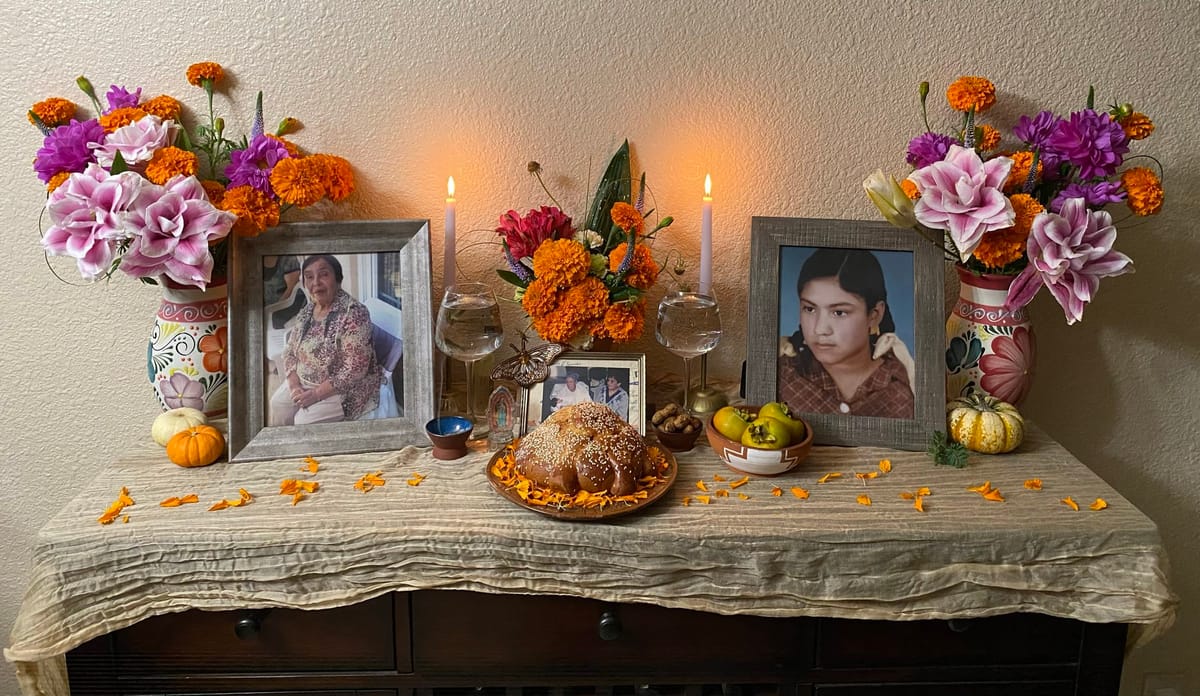
For those of you who don’t know me, I’m about as white as they come—blonde hair, blue eyes, and Germanic heritage. Nobody is going to look at me and think I’m anything other than a gringo. But I’ve been living in and around Hayward for most of my life, so Día de los Muertos has always existed in the background and I know it’s important to a lot of people.
This year, though, it feels more personal than last year. Maybe it’s because I’m paying more attention to what’s going on around me. Maybe it’s because I know more people who are celebrating. But the more I see it, the more I think it’s a beautiful and touching event that I’d prefer to Halloween in a lot of ways.
But when I heard that the Eden Youth Día de los Muertos Cumbia event was postponed, it felt like a big deal to me. In their Instagram post, they specifically cited increased ICE activity. “Due to heightened ICE enforcement presence in our area, we’ve made the difficult decision to postpone to protect our community’s safety,” they said.
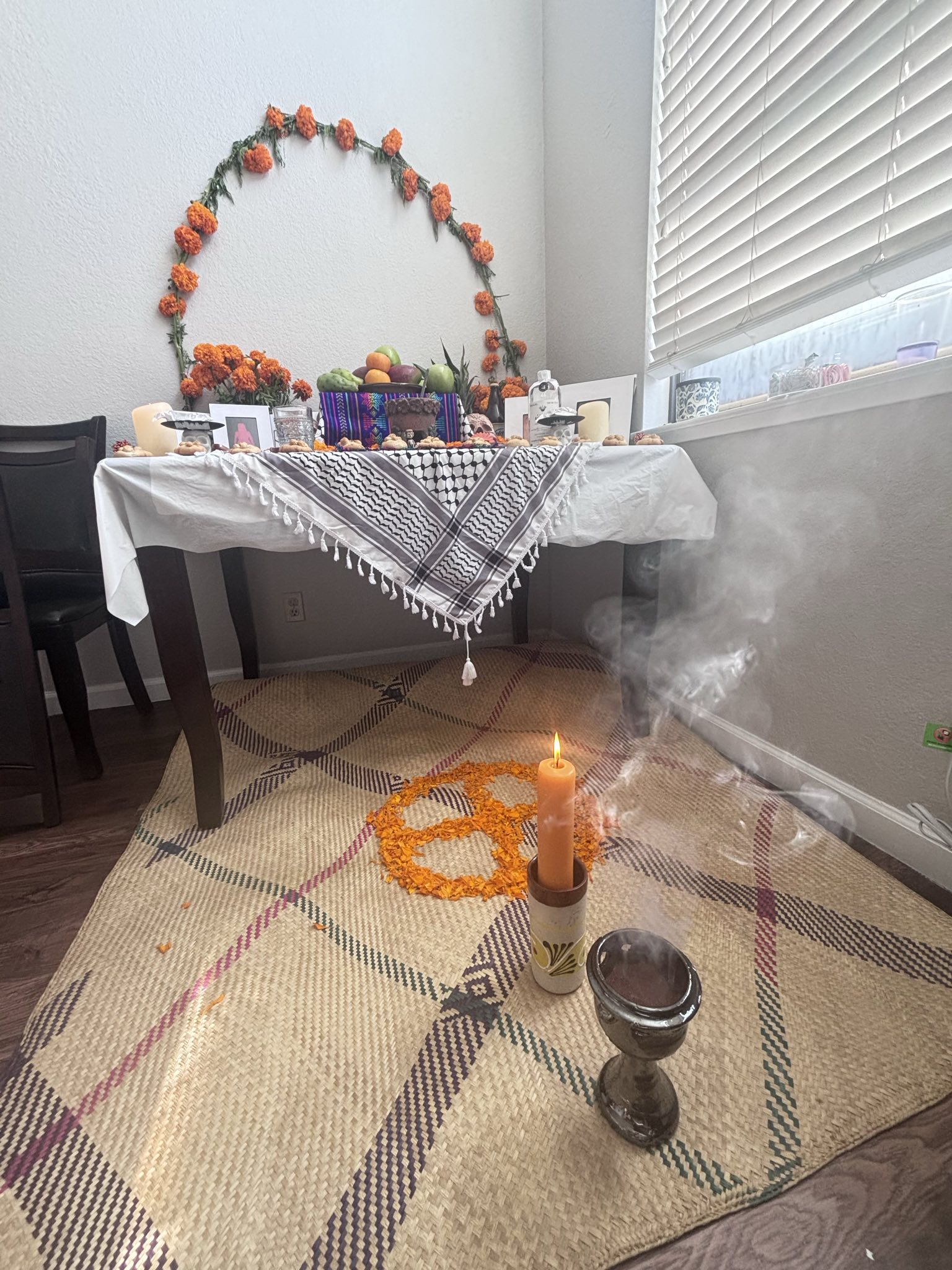
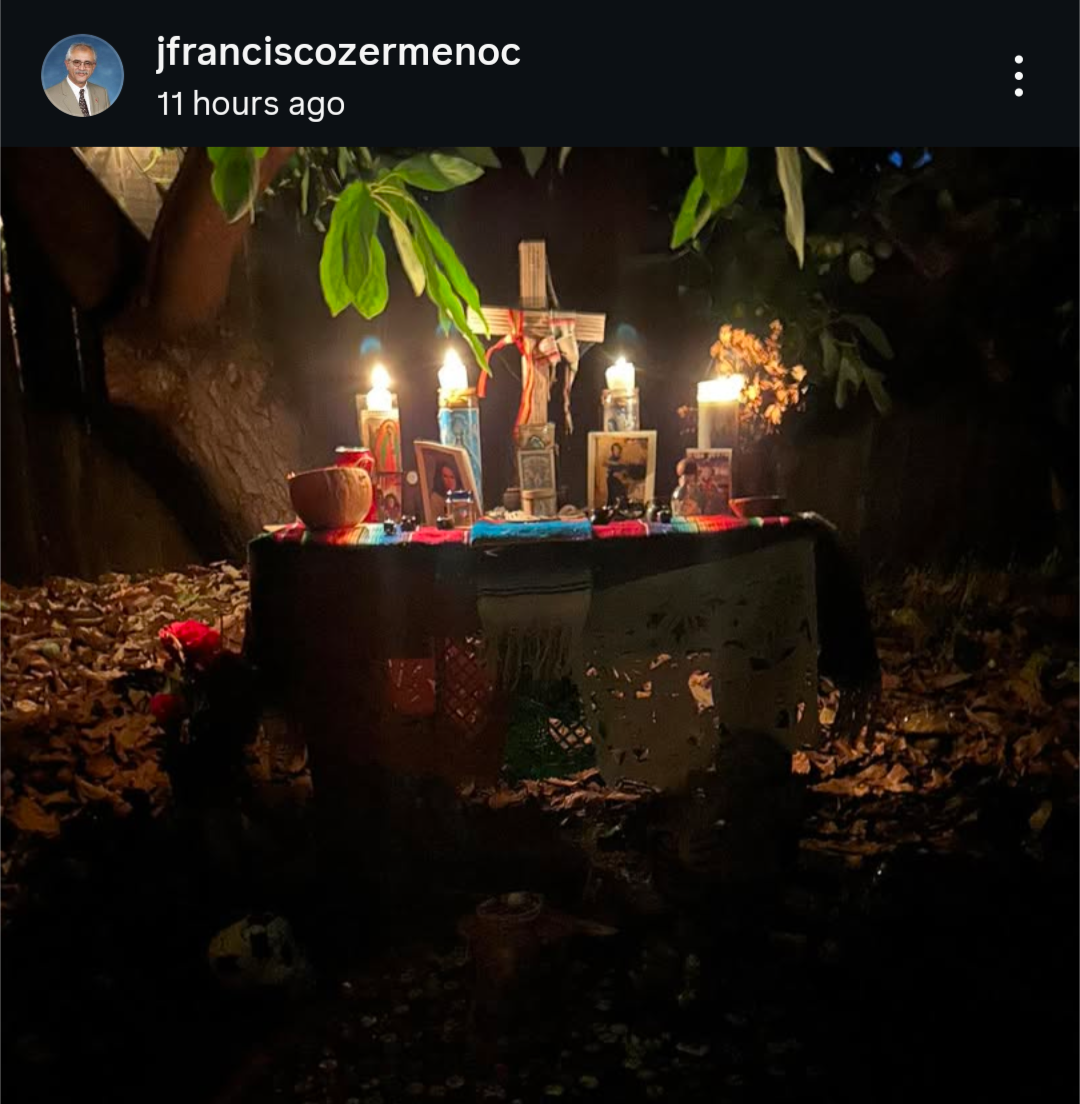
They moved the event online and streamed it via Facebook Live, but it felt like a big deal—something so public and culturally relevant being moved online out of fear. So with that in mind, I wanted to take a moment to share some information about Día de los Muertos, why it may feel particularly important right now, and show some pictures of ofrendas that friends of mine were kind enough to let me share.

According to The Encyclopedia of Death and the Human Experience, Día de los Muertos (Day of the Dead) is a Mexican festival where the living invite the dead to join the family and share a meal together before returning to the land of the dead. While many specifics vary depending on the region of Mexico people are from, the idea is to remember and honor the dead toward the end of October.
It’s likely derived from Aztec festivals, combined with Catholic feasts of All Saints’ and All Souls’ Day—specifically the tradition of the Feast of Fools. Many of the most notable symbols include calaveras—skeletons or bones—motifs, including face paint, decorations, and food stuffs. There are also a lot of marigolds (specifically cempaszuchitl or cempasúchil, depending on your spelling), the petals of which are used to create a path for the dead to return home.
There is also a related day on October 27th called Día de las Almas de las Mascotas (Day of the Dead for Pets), though pets are also included on November 2nd for Día de los Muertos.
Unlike many European traditions around death that we’re used to—especially in the more Protestant-leaning United States—Día de los Muertos is more of a celebration than a mourning. “At night during the fiesta, in Xoxo, Oaxaca, the small cemetery is ablaze with lights from tall candles placed around the graves. A mariachi band circulates, playing tunes for the living and the dead while vendors sell food and drink,” according to the Encyclopedia entry.
Celebrants usually make an ofrenda—or altar—with images of the deceased, food that they liked, and other items they enjoyed while alive. The idea being that the deceased are welcomed home for a meal and to reunite the family. If you heard any late-season fireworks this past month, they are also sometimes used as a way to announce to the dead that it is time to come home.
In the section about the significance of the Día de los Muertos fiesta, there was one section that I wanted to quote at length:
In his study of Mexican identity, The Labyrinth of Solitude, poet and essayist Octavio Paz observes that Día de los Muertos is a time for revolting against ordinary modes of thought and action; the celebration reunites contradictory elements and principles, bringing about a renewal of life. The rituals honoring and remembering the dead not only connect members of the community, they also reinforce the belief that death is a transitional phase in which individuals continue to exist in a different plane while maintaining an important relationship with the living.
One person shared their perspective on the holiday. “Having specific days to mourn allow us to honor and bear witness to our own and each other’s grief and loss in community rather than alone,” they said. “Sharing memories, traditions, and holding space together—whether in a small private home ofrenda or a communal altar—are some of the ways we choose to celebrate these holidays.”
Especially in California, where so many Mexican and Latine families have been separated—due to economic need, avoiding persecution, or other circumstances—I think Día de los Muertos is even more resonant. One person I talked to explained that she’s the first generation outside of her village and said, “The village is the most beautiful thing right now.” The cultural and community connection this festival symbolizes is needed now more than ever.
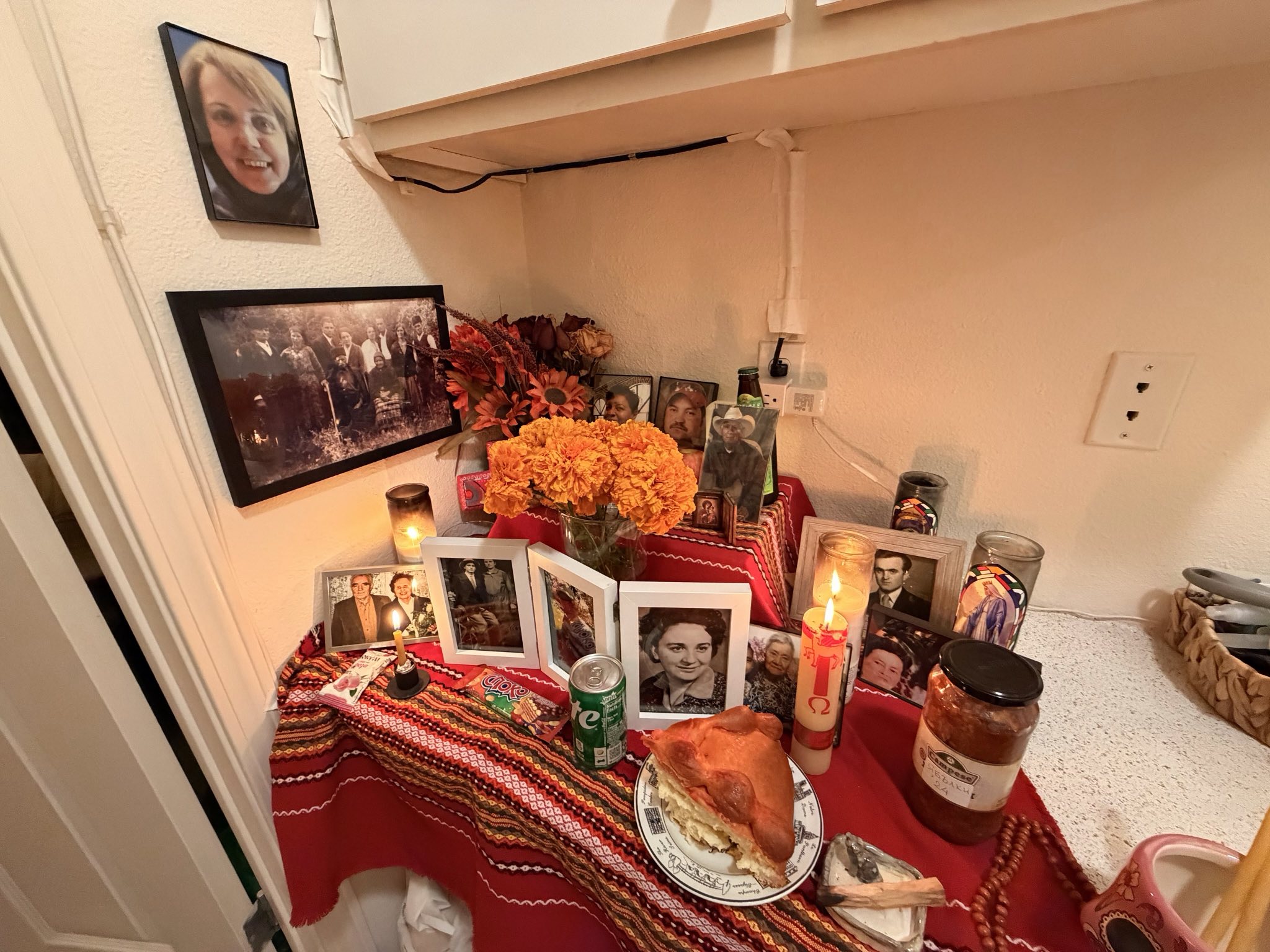
And with that in mind, I wanted to do something to create community in our City and share some images of this important holiday. Día de los Muertos may be over by now, but I want to invite you all to look closely at the ofrendas in this story. Look at the faces, the food they enjoyed, and the things that mattered to them in life.
I hope that next year things are different—that people in our community can celebrate the lives of their loved ones without fear of repression, imprisonment, and deportation. I hope that graves and homes erupt in candle light and flowers. And even if we aren’t out from under the boot of our proto-fascist federal government, that we are a strong enough community to stand up for each other and protect one another.
If Mexican culture confronts death with a “humorous sarcasm” as the article says, if it’s truly “an equalizer that not even the wealthiest or most privileged can escape,” then maybe we could all do with adopting some of that mindset. If death is just an awakening, then what is there to fear?
Southland Mall Sold To Investors With Israel Ties
According to reporting at SiliconValley.com, Southland Mall was recently sold to a New York City investment group for $70,000,000 on October 24th. The purchaser, Namdar Realty, appears to have a habit of buying underperforming malls at low prices—so-called “value-added properties,” according to the company’s website. The strategy usually involves adding improvements and upgrades to the property to increase its value.
However, according to reports, another Namdar Realty property in Citrus Heights hasn’t gone as planned. Just this past August, the City of Citrus Heights began a pre-condemnation appraisal—condemnation is the process of taking a property for public use with eminent domain. “In response to continued community complaints, city staff inspected the Namdar-owned portion of the property in May 2025, resulting in extensive violations and a notice to abate issued the following month,” Citrus Heights officials stated in a web post.
Thanks for reading Hayward Herald! This post is public so feel free to share it.
One of the unique things that Namdar brings to real estate purchasing—aside from a flipper ethos—is where its money comes from. According to their CEO Igal Namdar, his company doesn’t carry a lot of debt and has access to international money. “We also have an Israeli company,” he said in a 2024 Bloomberg interview. “We’re public in Israel, as well, so that also helps with them—[we] built up our trust over the last 7-8 years. So we’re able to have access to Israel money as well.”
In January of 2024, the City of Hayward divested over $1,600,000 in bond investments in companies that were targeted by the BDS Movement for complicity in the ongoing genocide in Palestine, Gaza, and the West Bank.

Comments ()