
Finding Community on Avenue Q
How Chabot College students built more than a musical.
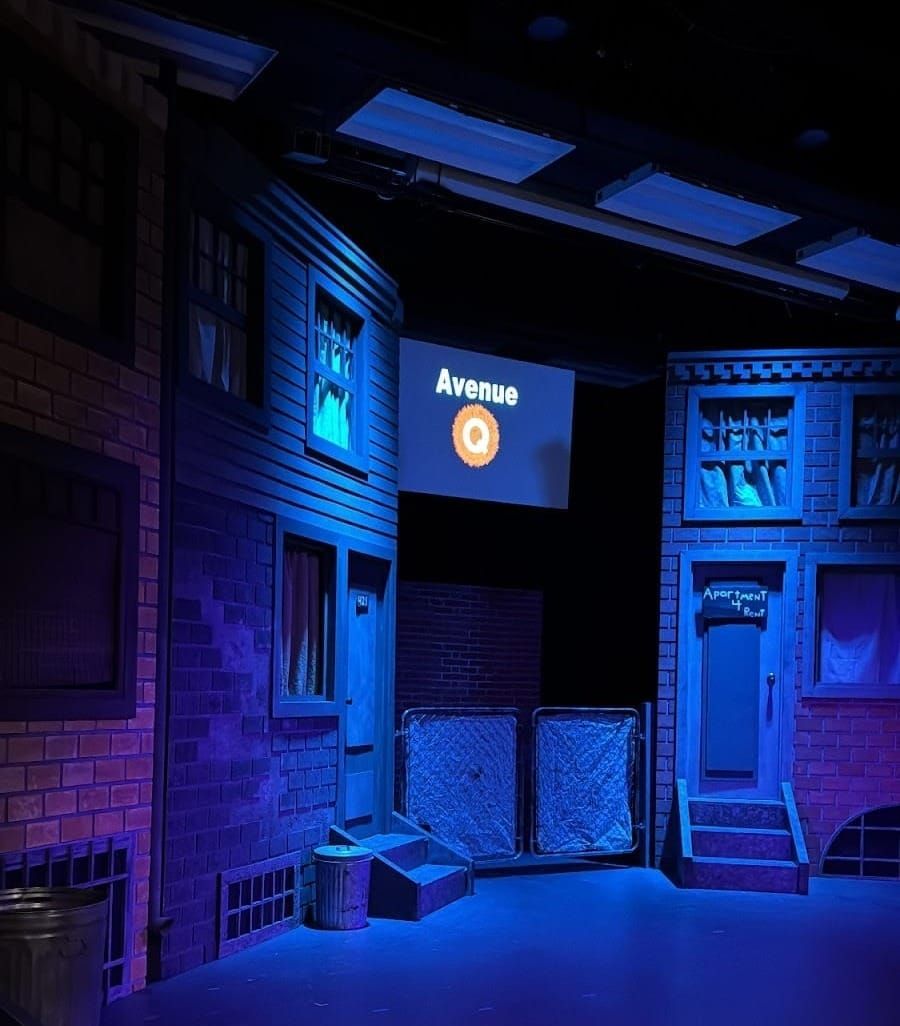
Late Sunday afternoon on March 29th, the Stage One theater at Chabot College filled with families, friends, and community members gathering for the final performance of Avenue Q. Laughter echoed through the lobby as audience members settled into their seats. For many, it was a chance to enjoy a musical. For others, it marked the celebration of a community built over months of rehearsals and collaboration on shared challenges.
Avenue Q, winner of the Tony Award “Triple Crown” for Best Musical, Best Score, and Best Book, blends Sesame Street-style puppets with a human cast set against inner city stoops marked with door numbers like 420 and 690. The musical is intentionally R rated, with standout songs such as “Everyone’s a Little Bit Racist” and “The Internet Is for Porn.” The playbill includes a parental advisory warning audiences that the show contains explicit content, including full puppet nudity.
Though known for its irreverent humor, Avenue Q centers on something deeply familiar: young adults searching for purpose, navigating uncertainty, and finding connection in unexpected places. Those themes resonated deeply with the Chabot cast, many of whom were navigating their own journeys.
Jesse Macias, who plays Princeton, described the experience as both exciting and overwhelming. “This is, I think, for all of us our first show out of high school. So it's just been a big culture shock,” he said, noting the complexity of the production and the level of talent among the cast.
For more than two hours, audiences laughed as human and puppet characters sang and danced through stories about loneliness, identity, and belonging. But what unfolded backstage reflected many of those same themes in real time.
The Hayward Herald is the only place you can go to stay up-to-date on the Hayward arts and culture scene. But we rely on you, members of our community, to keep us going. Consider becoming a member today.
Finding Belonging on Avenue Q
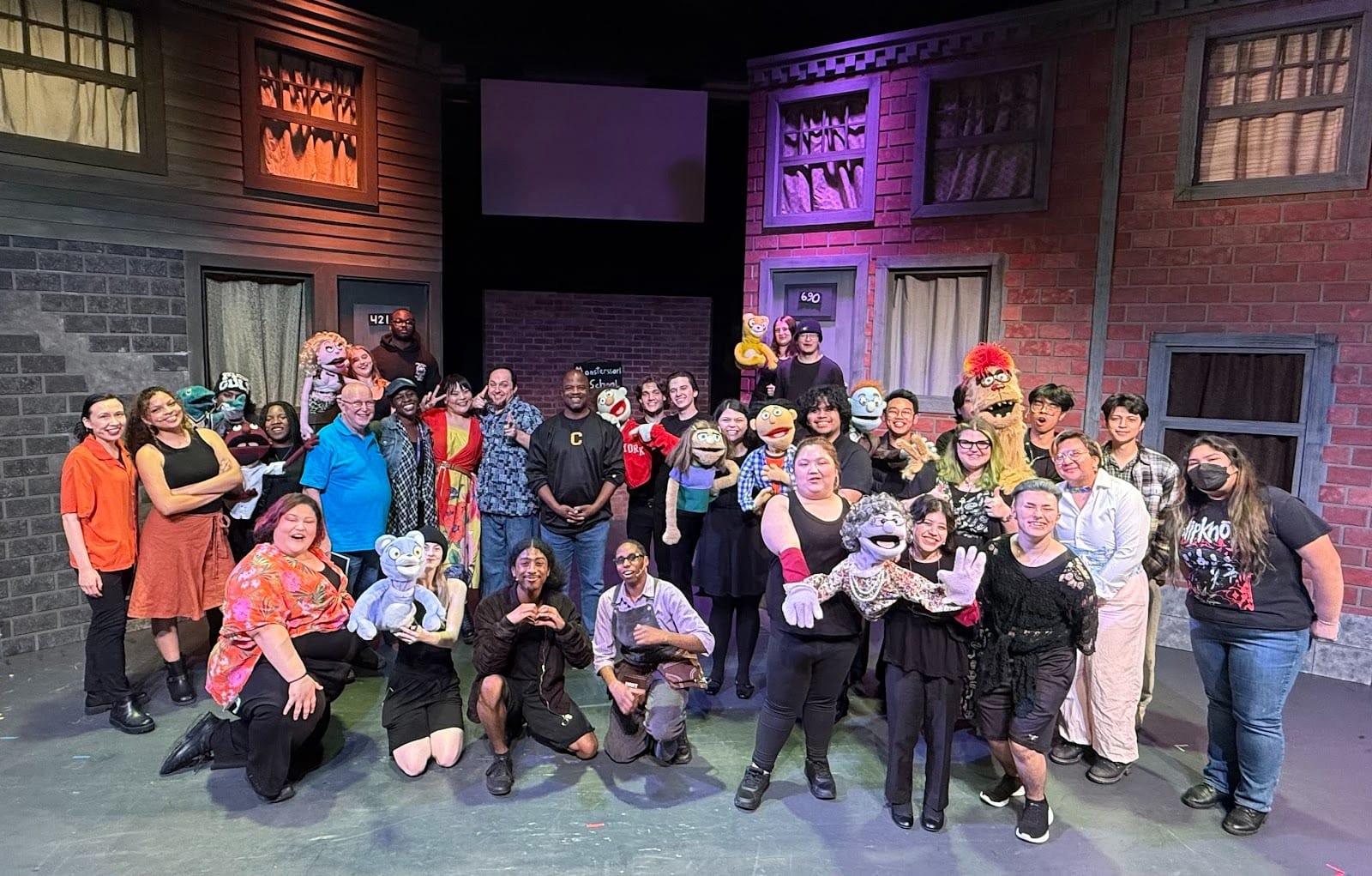
Themes of belonging and inclusivity were not only explored on stage but practiced daily throughout the production. The collaborative environment at Chabot made space for students of varying backgrounds and abilities to participate fully in the show.
Jax Freese, the student props master who is hard of hearing, worked with stage management to rely on lighting cues instead of audio. Ensemble member Thalia Valenzuela Tonia, who is legally blind, memorized pathways both onstage and backstage with support from fellow cast members. These adaptations were part of the collaborative environment that helped define the final production.
That sense of belonging echoed the themes of Avenue Q itself. Princeton arrives searching for purpose. Kate Monster struggles with loneliness and insecurity. Rod confronts his sexual identity. Christmas Eve navigates unemployment and cultural adjustment. Each character searches for community in their own way. For the cast at Chabot, that search felt familiar.
Danae Diogo, who plays Gary Coleman, returned to Chabot after initially enrolling for psychology. After performing in a previous production, she found herself drawn back. “This community is so strong, from day one,” she said. “I got to meet so many people. And I got to make so many friendships.”
Isa S. Chu, who plays Christmas Eve, reflected on how the show resonated personally. Comedian Ann Harada left a lasting impression when Chu first encountered Avenue Q. “To see an East Asian person play an East Asian person on stage was really meaningful,” Chu said.
A community also formed through the physical work of building Avenue Q. Unlike many high school productions, Chabot students participated in constructing the set themselves. For many, it was their first time working on a large-scale stage build.
Jax described the complexity of designing a functional set with doors, windows, and second story platforms, all while accommodating puppets and choreography. As student props master, Jax admired actors ability to navigate on set. “It's so much more difficult, especially with the rodded puppets, being able to open those doors, open those windows. Now I've got to remember my line, figure out how to open this door, figure out how to walk downstairs with a puppet,” Freese said.
Rehearsals also evolved alongside the set. Early practices took place without puppets, requiring actors to simulate movements with their hands. When puppets arrived halfway through rehearsals, the cast had to adjust quickly.
Collin McNicholas described the transition from abstract rehearsal to full production. “When we didn't have a puppet, and we didn't have a set, we're just standing on a blank platform with our bare arms just doing hand gestures. Then walls get put up, doors get installed, and then we get a puppet, and we have to become much more conscious of our space,” he said.
As students built the set piece by piece, they also built a shared sense of responsibility for one another. Marin Clark emphasized that the work carried real stakes. “When you're building it, other people aren't just sitting on this. We are standing on this. Our friends are standing on this,” Clark said. When the walls finally went up, the transformation was immediate. “The second the walls went up, it was like, wow. We are on Avenue Q.”
Building Community, One Production at a Time
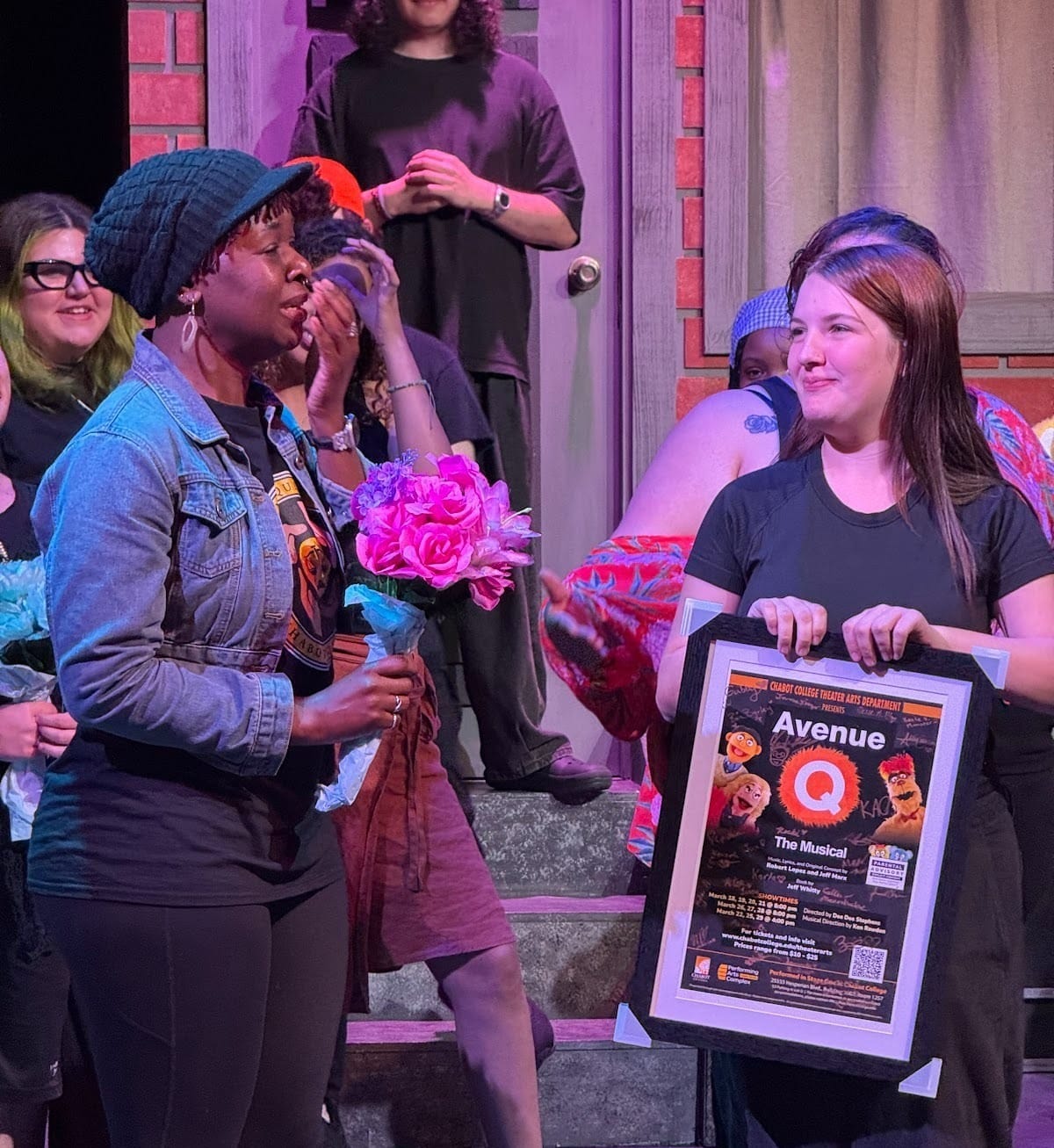
At the center of the community built around Avenue Q is director Dee Dee Stephens, whose leadership shaped not only the production but the environment in which it came to life.
Stephens intentionally selected Avenue Q because of its relevance to students navigating early adulthood. “At its heart, it adds humor to very real issues facing young adults, like trying to find your purpose, getting a degree and not knowing what to do with it, identity, racism, and navigating young love,” she said. “I've always been a fan of humor as a tool for speaking about serious issues.”
For community college students balancing coursework, jobs, and uncertainty about the future, those themes resonate deeply. Avenue Q offered not just a performance opportunity but a shared language for experiences many students were already navigating. Students consistently described Stephens’ leadership as central to building that environment. “Dee Dee is amazing and has made me feel completely welcome,” said Jax Freese. “It's just been such an amazing experience to work with all of these amazing people.”
Stephens joined Chabot College in 2020 and quickly became a driving force within the Theater Arts program. With an MFA in Acting from USC and over ten years of professional theater experience, she brings both technical expertise and a collaborative philosophy that places students at the heart of the creative process.
Like many artists in the Bay Area, Stephens teaches at multiple institutions, including the American Conservatory Theater in San Francisco, where she teaches acting styles. Still, she considers Chabot her home school, where her focus extends beyond performance to building community and creating meaningful opportunities for students.
“My main focus was on movement-based devised theater, where the performers are also collaborators to help create the story,” Stephens said. That collaborative approach is evident throughout Chabot’s productions where students are not only performers but also builders, designers, and creative contributors. The program frequently collaborates with the Music department, expanding opportunities for students and creating productions that reflect cross campus creativity and teamwork.
Stephens views teaching as a collaborative process shaped by mutual learning. “I don't think I'll ever not teach, but in my heart of hearts, my students are closer to my peers,” she said. That philosophy helps explain why Chabot’s theater program feels less like a classroom and more like a community. Auditions are open to the public, welcoming high school students, CSU East Bay students, non-theater majors, and working adults. Some participants come directly from work before rehearsals, reinforcing the community driven nature of the program.
Stephens hopes to continue expanding that model. “The very heart of a community college is that it's supposed to be for the community,” she said. Her vision for Chabot extends beyond individual productions. She hopes the program becomes a hub for community theater in Hayward, where students and residents alike can collaborate, create, and grow.
For Now, and Beyond
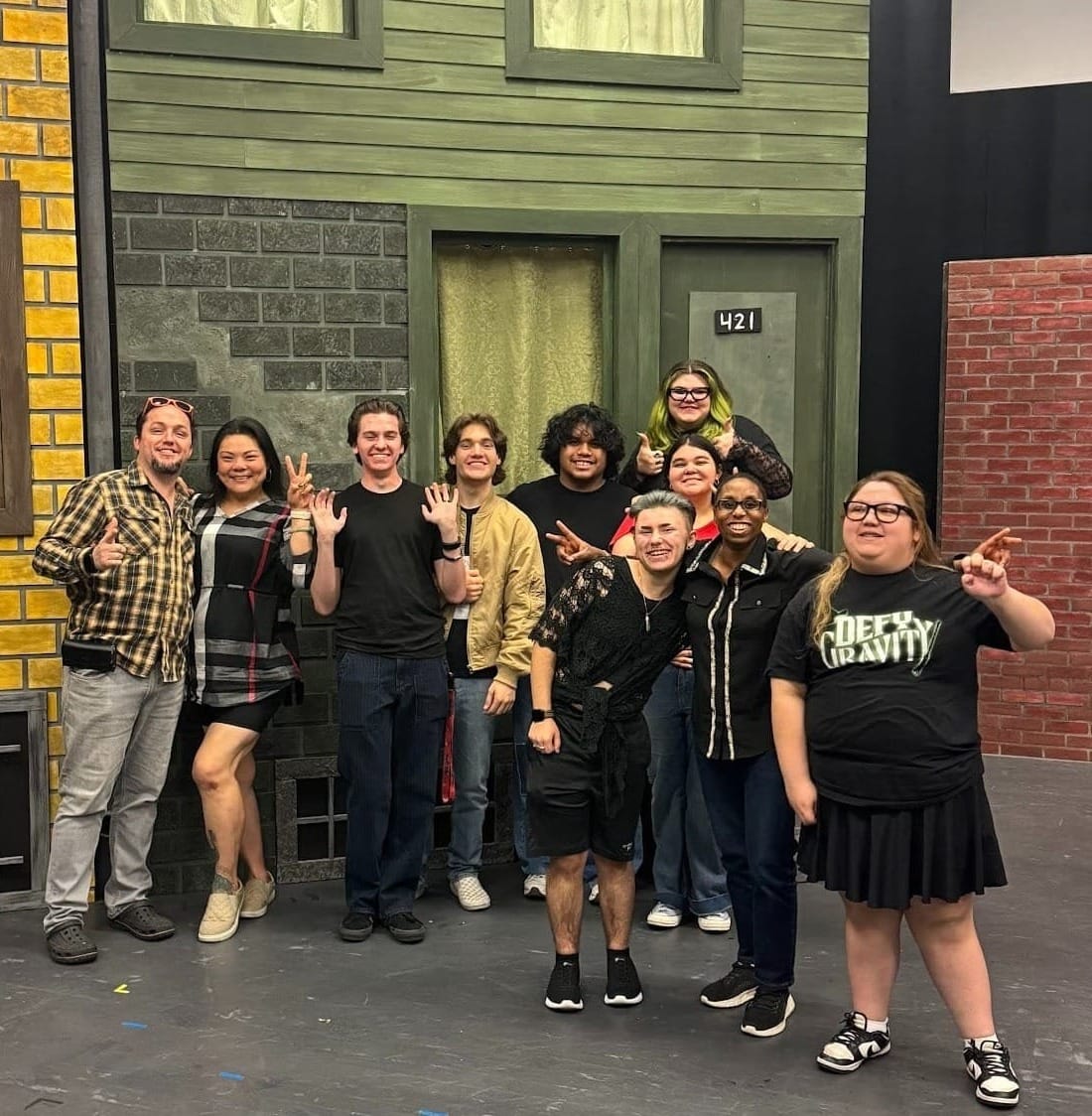
The final number of Avenue Q, “For Now,” reminds audiences that uncertainty, struggle, and even joy are temporary. The song offers a hopeful message that life’s challenges shift, evolve, and eventually give way to something new. That sentiment felt particularly fitting for the Chabot cast and crew.
Over the course of a semester, students arrived searching for purpose, connection, or simply a creative outlet. Through rehearsals, set construction, collaboration, and performance, they built something lasting. For Collin McNicholas, that connection reflected the heart of the show. “At the end of the day, it's a show about this young grad trying to find his way through life and meet some new people. And there's an infinite number of people who could relate to that.”
Chabot College’s Theater Arts program offers more than performances. It creates a space where students and community members can grow, experiment, and find belonging. Its commitment to open auditions and an accessible semester cost of merely $150 embodies the core ethos of community college, that education and opportunity shaped by and for the community it serves.
Like the message of “For Now,” each production may come to an end, but the relationships, confidence, and sense of belonging built along the way often continue long after the curtain closes.
Those interested in participating in future productions can follow the Chabot College Theater Arts Department on Instagram or visit ChabotCollege.edu/TheaterArts.

Comments ()