
HUSD Accountability Plan: Uneven Spending And Mixed Results
LCAP shows Foster Youth getting left behind. Hayward Agriculture: Produce and Promise brings you live conversation on March 7th. And Faith Ringgold Elementary finishes powerful mural despite impending closure.
At the February 11th HUSD Board of Trustees meeting, the District presented an update on their Local Control Accountability Plan (LCAP). The report summarized changes the District would like to see, the interventions that will hopefully create that change, and the amount of money spent on those interventions. While the early results appear mostly promising, some Trustees highlighted the uneven results across different student groups, with some falling even further behind.
Hayward Agriculture: Produce and Promise
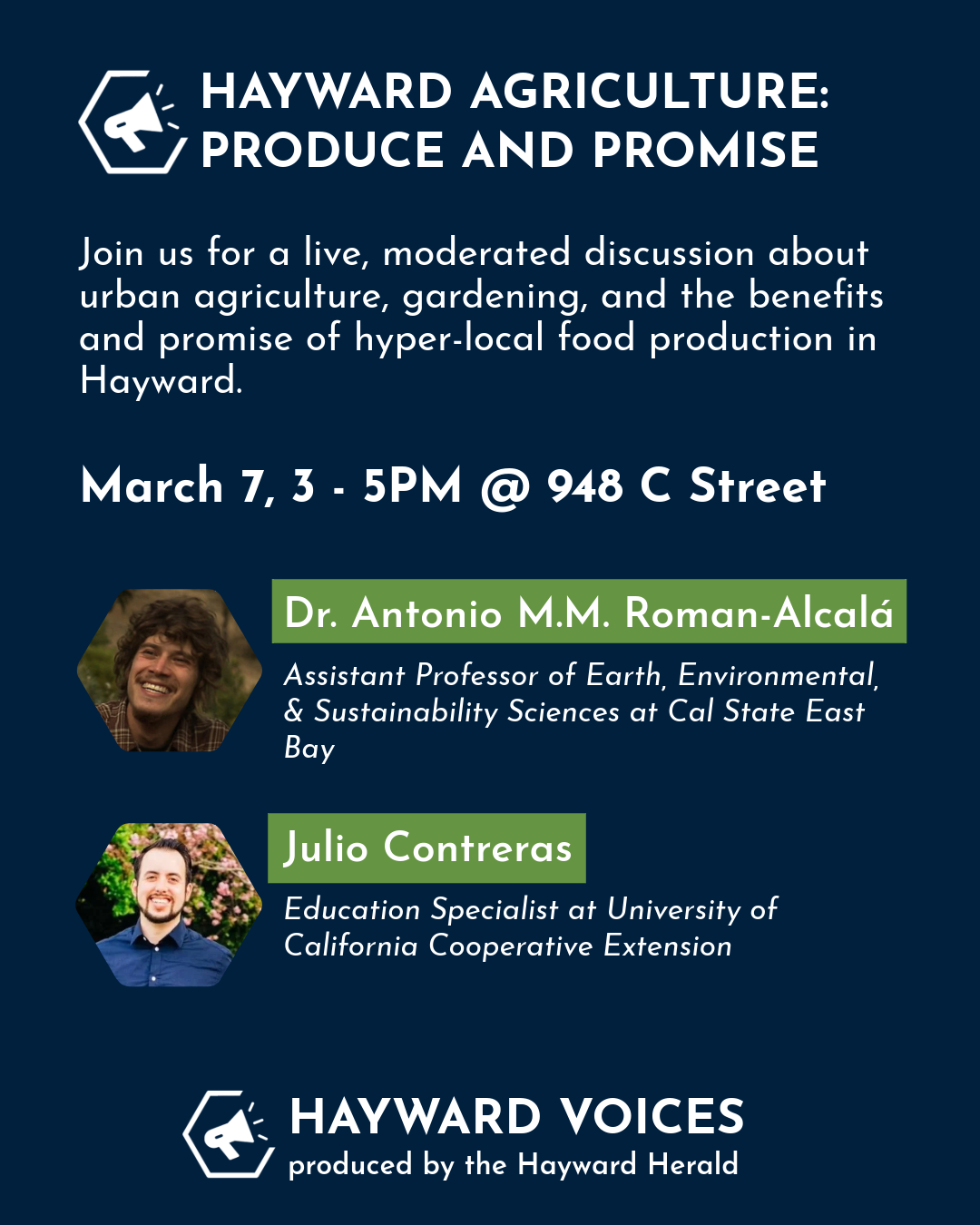
None of us can live without food. But modern agricultural practices are harmful to the environment and require single-crop farms to ship their produce across the country. Urban agriculture has the potential to mitigate those problems, and so much more.
Join Collin Thormoto, from the Hayward Herald, for a live moderated discussion about urban agriculture, gardening, and the benefits and promise of hyper-local food production. We'll be joined by our guests Dr. Antonio M. M. Roman-Alcala and Julio Contreras.
Date: Saturday March 7
Time: 3-5PM
Location: 948 C Street, Hayward
RSVP at https://tinyurl.com/haywardag
If you're interested in agriculture, community building, or sustainability, please join us!
What Is The LCAP?
The Local Control Accountability Plan is "a three-year plan that describes the goals, actions, services, and expenditures to support positive student outcomes that address state and local priorities," according to the HUSD website. It appears that the idea is to have a plan to best use the Local Control Funding Formula (LCFF) money, which the District gets from the State of California, though it's likely other money is also used in the LCAP.
As we covered on February 10th, the District took pains to explain the differences between Lead Data and Lag Data. Lead Data are things like daily attendance and intervention participation that are quick to track. Lag Data are more long-term, but often more telling, data like graduation rates and test scores that may not show up for multiple years. For example, a student may get an intervention in 7th grade that has a big impact on their success but they won't directly impact graduation rates until five years later.
Connecting Leading And Lagging
One of the potential issues with the LCAP may be what lead data is connected to what lag data and what the Return on Investment (ROI) is for those programs. Many different programs are tied to the same lag data, which can make it difficult to find out what programs are having the most impact.
For example, the District wants to reduce chronic absenteeism, since that is directly tied to reduced student achievement and reduced district funding. But four different interventions are supposed to impact chronic absenteeism: Professional Learning and Equity Oversight Committee, Academic and Mental Health support requests and COST team, the Student Attendance Review Board (SARB) and other attendance-focused meetings, and Student health and wellness interventions like nurses visits.
The Hayward Herald is free to you because of the generous support from our community. Join us to ensure the Hayward community continues to receive local news they can't find anywhere else.
Over $6,000,000 has been spent on these interventions, ranging from under $28,000 to over $3,000,000. If all of those interventions are being judged on reductions in chronic absenteeism, it will be impossible to know if the least expensive or most expensive intervention has the most impact.
It's also unclear from the information provided whether the LCAP interventions are based on research conducted at other K-12 institutions, or merely the result of teachers and District committees developing programs from scratch. The presentation says that the RAISE program is "proven to reduce chronic absenteeism" and the Reading By Third Grade program says it is using "evidence-based literacy practices." There may be evidence to support using many of the interventions listed, but such wording was not consistently used in the presentation.
This may be a concern for parents and residents, because HUSD school sites often have a large amount of freedom in how they approach educating their students. For example, the District Staff said, "The LCAP actions are intentionally aligned with each school's plan for student achievement," suggesting that every school site may have a different plan.
Getting A Clearer Picture
Trustees asked pointed questions about some particular areas of the LCAP, including where the data appears to be failing certain students. President Bufete noted that there was a decline in feelings of safety for certain grade levels in High School and what the strategy was for turning it around.
Staff didn't know why students are feeling less safe. "Why aren't we seeing an increase in students feeling safe and connected to school when we are really trying to promote student leadership around promoting school climate and peer mentorship," they said. They pointed to high levels of student participation in the programs, but appeared to have no alternate plan if those interventions aren't effective.
Trustee Sara Prada expressed a desire for more data, including the number of sessions offered for Professional Development, the help offered at employee request, and other data for professional development activities across the plan.
Trustee Rawdon asked about the cost of the Visual And Performing Arts (VAPA) interventions. "I know that the combined salaries that VAPA teachers are getting are somewhere in the vicinity of $4 million. Where's the rest of it?" he asked. Staff said that the majority was spent on staffing, but that the definition of VAPA is very broad. "Anything that's related to visual and performing arts is included in there," they said, including elementary school prep music, prep art teachers, and secondary school teachers teaching Career Technical Education art courses.
Foster Youth Left Behind
The District's foster and unhoused youth were a particular point of interest for Trustees because their success rates appeared to be going in the wrong direction for many indicators. President Bufete noted that they had increased rates of Chronic Absenteeism, but Staff did not appear to have an explanation. They instead said they'd follow up with the Coordination Of Services Team (COST) and the Attendance Committee to try to get some answers.
Trustee Bruckner-Carrillo also wondered how the improvement targets were chosen, especially since Foster Youth were having decreasing success rates in many measures. District Staff said that it is difficult to address the needs of a small group of students spread across so many different school sites.
Trustee Bruckner-Carrillo then wondered how realistic it was to expect a 60 point change for Foster Youth in a year and a half. "Are we setting ourselves up for anything but success?" Staff admitted that the target was not likely to be met for Foster Youth.
Faith Ringgold Elementary Celebrates Amid Proposed Closure
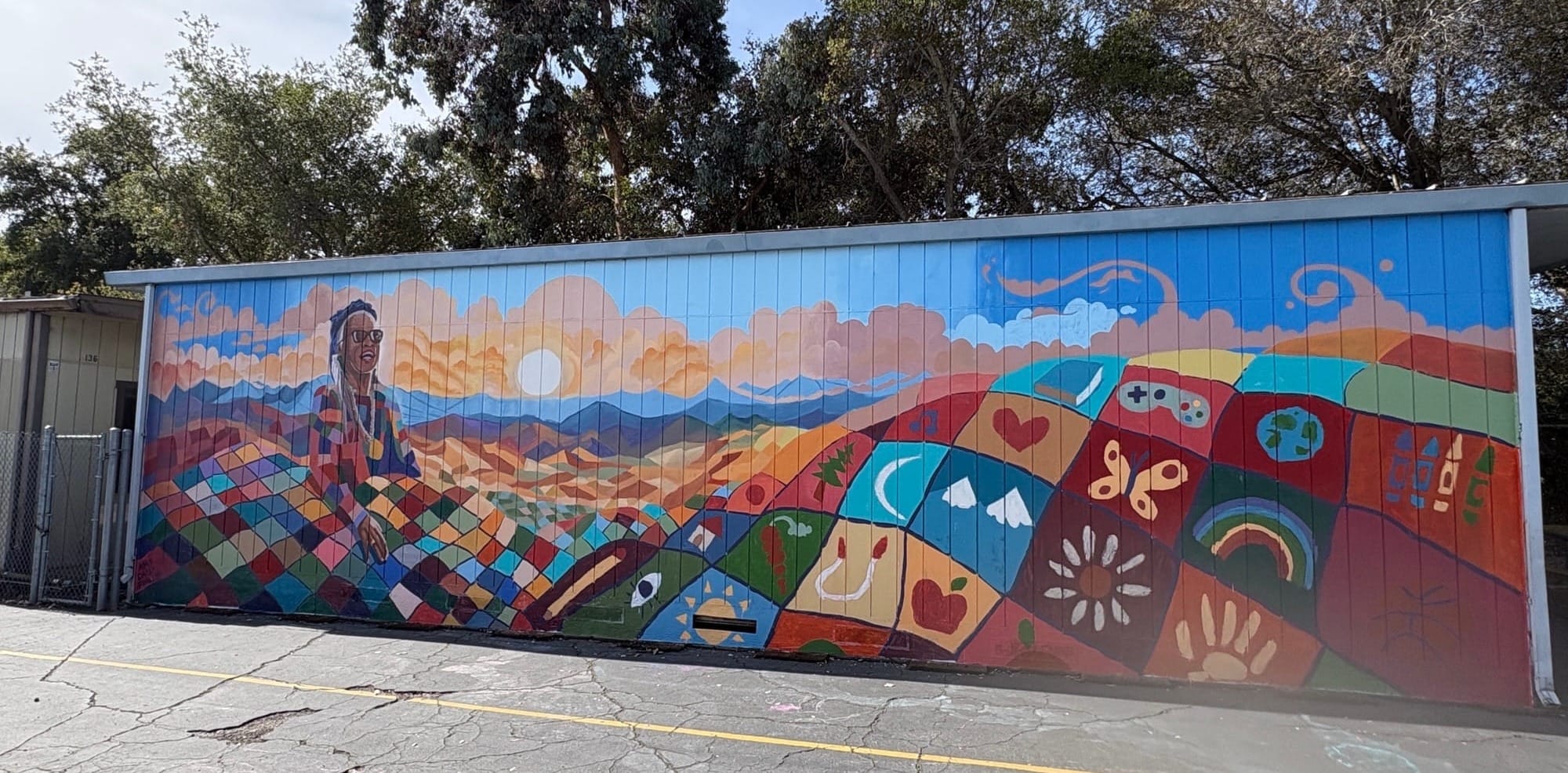
On Monday February 23rd, students at Faith Ringgold School of Arts and Science added the final touches to a new mural celebrating pride, identity and belonging. The mural, led by Inspired Murals and artists Phillip Altstatt and Amy Altstatt, was created with generous support from Dunn-Edwards Paints. Students participated from the concept stage to the final touches, highlighting their connection to the school. “This mural reflects how deeply students feel about their community,” said Amy Altstatt. “It’s a visible reminder that schools are built on relationships, not just buildings.”

The mural draws inspiration from the legacy of artist and activist Faith Ringgold. Faith Ringgold, who passed away in 2024, was a Black painter, author, and artist. She is perhaps best known for her thangka quilts and story quilts, of which one of the more famous is Tar Beach (1988), which was later translated into a story book of the same name. She was also active in many feminist and anti-racist organizations, including Women Artists in Revolution (WAR) and Women Students and Artists for Black Art Liberation (WASABAL).
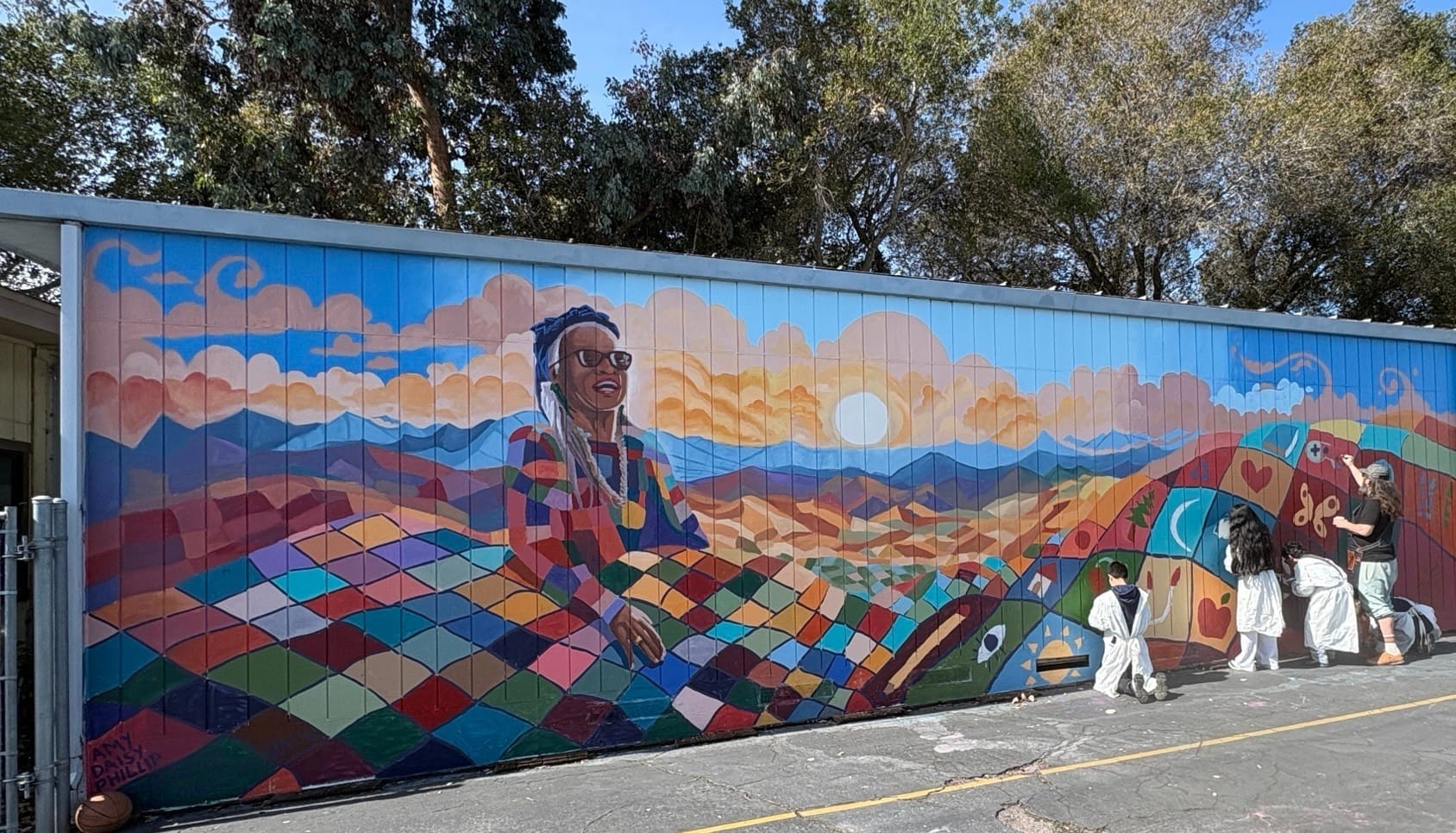
"This mural is more than paint on a wall it is a declaration of who we are," said Faith Ringgold Principal Vanessa Smith. "It stands as a symbol of the strength, resilience, and character that define this school and the children and families it serves. This artwork reminds us that our community’s spirit cannot be erased. We are fighting not just to keep a building open, but to protect opportunity, stability, and hope for every child who walks through these doors. This mural is our promise: we will stand together, and we will stand strong.”
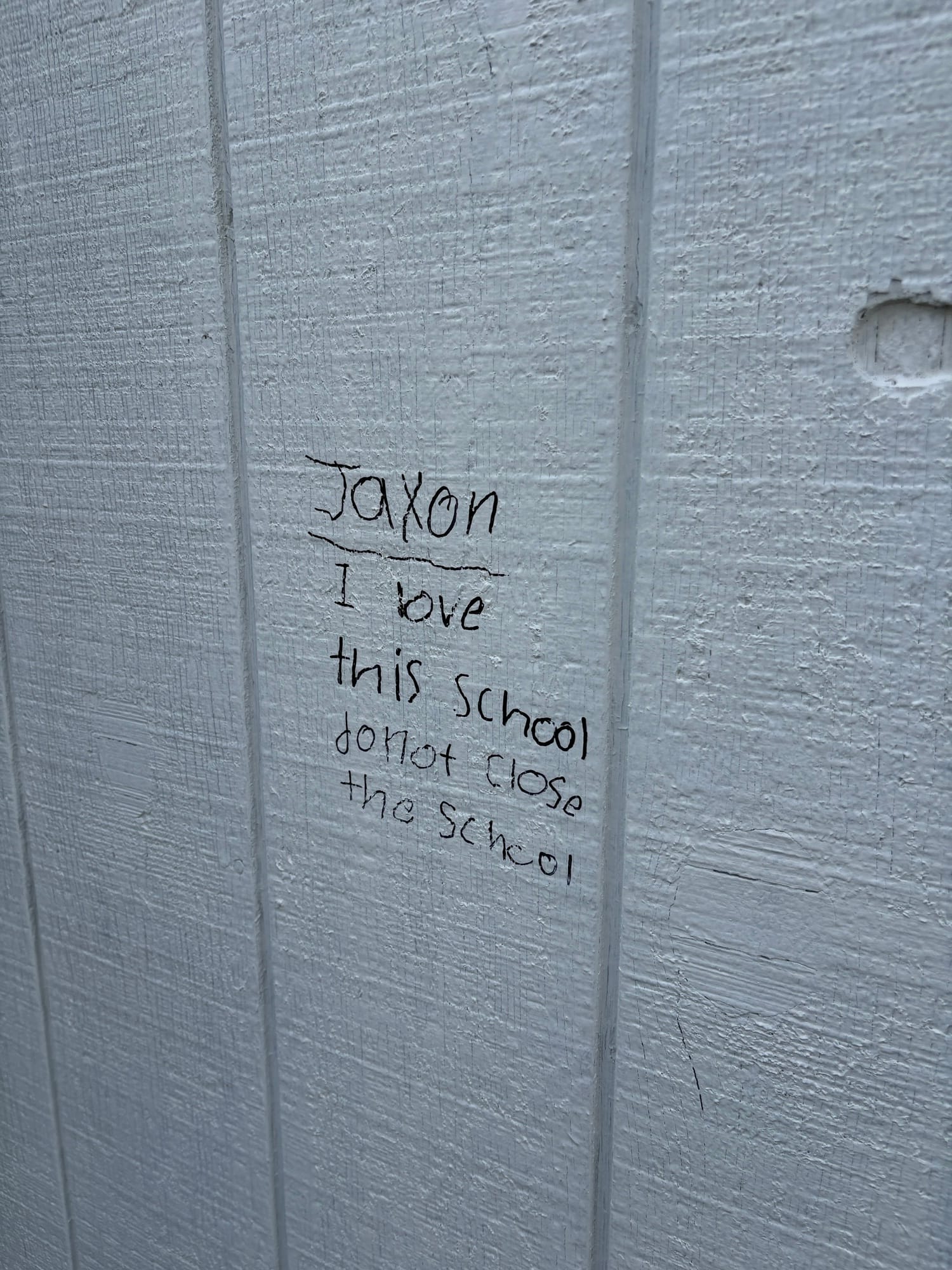
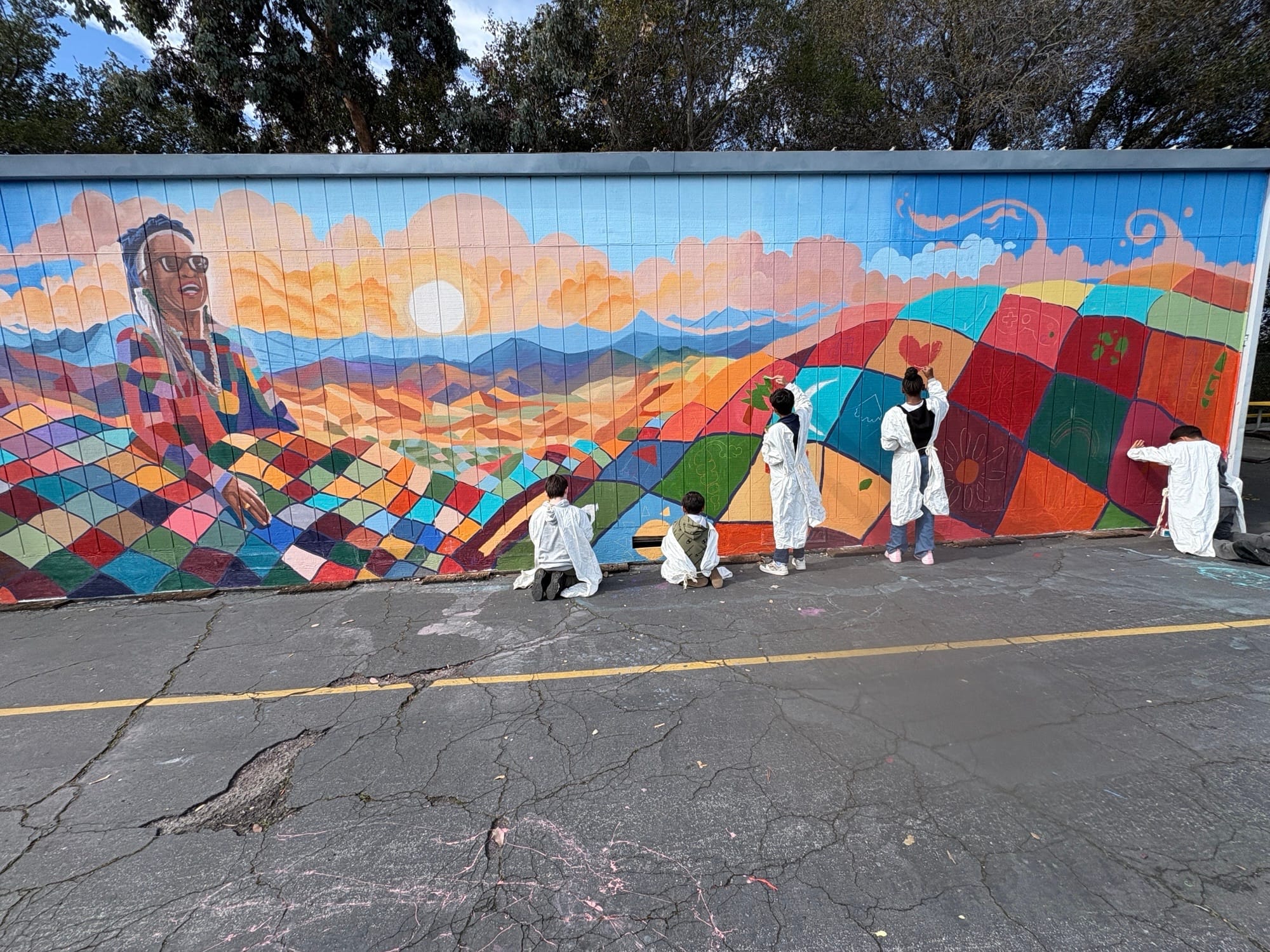
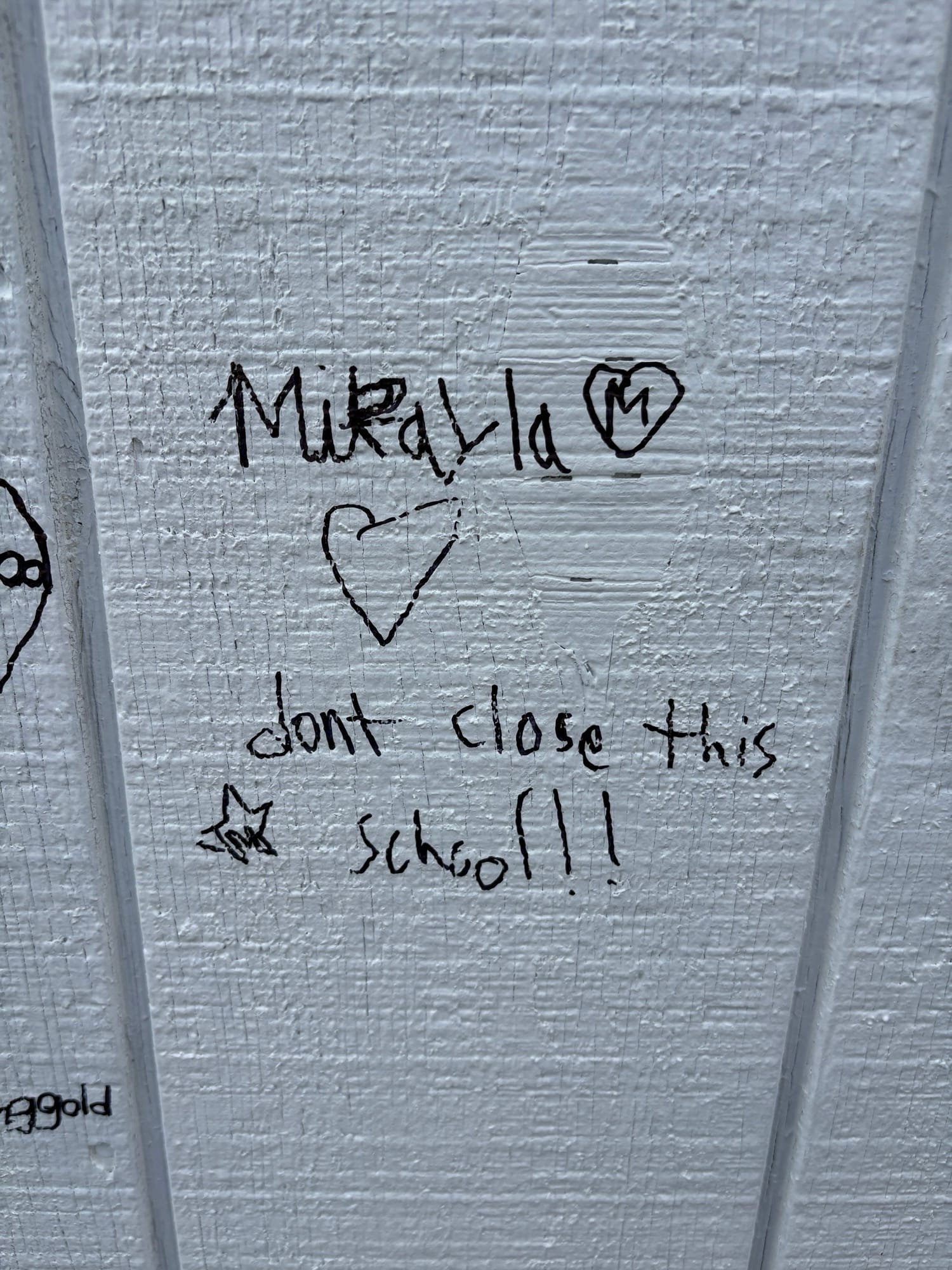
Photographs courtesy of Amy Alstatt.
According to the recent draft of the HUSD Fiscal Solvency Plan, Faith Ringgold School of Arts and Science is expected to be closed to save $462,000 per year as part of an effort to close a budget gap of over $7,000,000. The school was supposed to be a magnet school with a specialized program which, according to Superintendent Chen Wu-Fernandez, was never implemented. It currently serves 144 students from across the district.

Comments ()