
Opinion: Hayward Residents Need a Rental Registry
In Which: A community member argues that Hayward needs a transparent, enforceable, rental registry.
Written by Calvin Wong
From 2022 to 2023, I leased a two-bedroom apartment for $2,500 per month. During that time, my roommate and I endured what I can only describe as a nightmare, plagued by recurring habitability issues—including pests, mildew, false fire alarms, and a malfunctioning air conditioning system. Despite submitting multiple tickets to management throughout the year, our issues were rarely addressed.
My experience is not unique—many Hayward residents are living through the same nightmare right now. In 2024, the City of Hayward received more than 250 tenant complaints. That figure likely understates the severity since many renters are unaware that filing a complaint is an option.
Thanks for reading Hayward Herald! This post is public so feel free to share it.
These issues exist on top of the city’s sky-high rents, which are straining household budgets. Census estimates from 2011-2015 show that 86% of Hayward renter households paid less than $2,000 a month in rent. By 2019-2023, only 28% did. Moreover, the city’s share of rent-burdened households has hovered around 40% since 2015. Between 2019 and 2023, 8,949 renter households, representing 44% of all renters, spent 35% or more of their household income on rent.
Renters cannot afford to wait on the city to investigate their complaints. To address these challenges proactively, the city needs a rental registry.
What is a Rental Registry?
A rental registry is a database that city staff and elected officials use to track rental property information on a unit-by-unit basis. It can include information on rent prices, proposed rent changes, and property owner contact details. With this information, the city can make informed policy decisions that tackle the drivers of Hayward’s housing crisis and habitability problems.
This tool would also help the city enforce existing housing laws. With only six housing division staff, the city lacks the personnel to actively monitor affordability and living conditions. However, with a rental registry where landlords must submit proposed rent changes and details on why tenants are moving out, city staff would be better able to proactively protect tenants from illegal rent increases and unsafe living conditions.
Giving Vulnerable Renters a Voice
I recently spoke with someone who, under the condition of anonymity, shared with me a nightmarish situation involving his mother, who is a Hayward renter. She had lived in the same unit for decades, rarely calling for maintenance or requesting repairs. She believed this was a fair arrangement as her landlord never raised her rent since the day she first moved in. That made it all the more shocking when she received notice of an 85% rent hike a few years ago. Afraid of losing her home, she pleaded with the landlord and reluctantly accepted a negotiated increase.
In 2024, her landlord handed her another increase—this time a 20% hike. Still traumatized by the last increase, she planned to accept it. However, her son realized the landlord’s proposed hike violated the city’s limit on banked rent increases. He challenged the increase and the landlord backed off. Even so, he fears his mother’s landlord will retaliate against her.
Her story is an example of how a rental registry can protect vulnerable and fearful tenants. Like this mother, most tenants do not know the intricacies of Hayward’s renter protection laws. But even if she did, she would not have filed a complaint due to fear of her landlord finding out. A rental registry ensures that she and other renters do not have to take that risk. Instead, housing staff would be notified of any proposed illegal rent increase and be prompted to investigate. This tool gives renters peace of mind, ensuring they do not need to be well-versed in housing law to avoid being illegally priced out of their home.
Another Way to Reduce Homelessness
We simply cannot afford to have any more of our residents become homeless. Since 2017, Hayward’s homeless population has fluctuated between approximately 400 and 500 individuals, according to the city’s Point-in-Time Homeless (PIT) Count. The actual figures are likely higher as national research suggests PIT surveys significantly undercount the homeless population at a given time. As a member of the city’s Community Services Commission, a body that makes recommendations to the City Council on how to allocate funds to the city’s service providers, I often hear my colleagues ask whether funding for housing and homelessness organizations is making a difference. Our commission recommends tens of thousands of dollars each year to fund these programs, yet the city’s homelessness statistics remain stagnant.
The problem, however, is not with these organizations or the services they provide. Their annual reports to the commission indicate that city funds are being used to help homeless people access temporary housing, food, and job counseling. The problem is that we need more resources dedicated toward preventing homelessness. On April 15, 2025, I made a public comment before the Hayward City Council, urging additional funding to organizations that provide housing and homelessness services in the city. I also argued the traumatic cycles of homelessness will only end if paired with policies that ensure housing remains affordable and habitable—precisely the outcomes a rental registry would enable city officials to achieve.
Ending cycles of homelessness would also save the city money. According to 2017 research by the National Alliance to End Homelessness, placing a chronically homeless individual into permanent supportive housing lowers taxpayer costs by nearly half and eases the pressure on jails, hospitals, and emergency departments.
What about Landlords?
While Hayward is in the early phases of developing a rental registry, landlord opposition is flowing in.
On March 20, 2025, one Hayward property manager attacked the rental registry as an “extreme regulation” that would subject landlords to a “laborious process.” First, Hayward landlords already file a business license application to operate in the city. Submitting information to a rental registry shouldn’t be any harder. In comparison, the landlord’s burden is minor compared to what is at stake for renters. Without adequate protections, tenants risk homelessness or severe illness.
The same property manager went on to say that “bad property owners are very few,” but even if most landlords are “good,” a rental registry protects renters from those who are not. It would mean that major Hayward landlords, such as Fremont Mayor Raj Salwan, would be required to report each time a tenant terminates a lease due to complaints of unlivable conditions at his properties. Each time that happens, the city can investigate the claim and conduct an inspection. Furthermore, if Hayward’s rental registry is publicly accessible, it could deter bad-faith landlords who routinely leave tenants in unsafe conditions by making their negligence widely known.
That also means a rental registry can be a lifeline for Hayward tenants who are unable to file a complaint with city hall. Some tenants don’t know it is an option while others may not out of fear their landlord will find out. Moreover, with the Trump administration sowing discord among immigrant communities, many renters may be reluctant to seek help from the city out of concern for their safety. City hall needs a rental registry so that it can proactively enforce housing law rather than relying on its currently inadequate, after-the-fact complaint process that puts tenants at risk of retaliation or deportation.
Finally, the property manager argued that having a rental registry would increase rents because the cost of doing business would go up. This argument is a misleading claim that distracts from landlords’ role in the city’s housing affordability crisis. While Hayward municipal code states that landlords covered by the city’s Rent Stabilization Ordinance can pass along 50% of fees to their tenants, doing so is completely optional. A landlord’s desire to maximize their profit is not more important than a renter’s right to have a safe and quality place to call home. Housing is the foundation for a stable life and is a human right. As current Hayward City Councilmember Ray Bonilla Jr. once said, “Everyone deserves a place to call home.”
Other Bay Area cities have overcome organized resistance from special interests to create their own rental registry and Hayward can do so as well. But getting the city council to support making one that is both comprehensive and transparent will be challenging. An analysis of the city’s campaign finance disclosures reveals that six sitting city council members have accepted substantial campaign donations from local and state real estate interests, five of which have accepted thousands from the California Real Estate Political Action Committee. The inroads these special interests made in Hayward politics means that city council is paying close attention to what landlords have to say.
Hayward Residents Deserve the Best
Despite landlord resistance to the rental registry, the Hayward community needs to come together to support it. A rental registry helps all Hayward residents, not just renters. When renters live in clean apartments, that is a victory for the health of our parents and kids. When renter households are able to keep more of their earnings, that is a victory for our local economy and small businesses. When people live in stable and permanent housing instead of on the street, that is a victory for the safety and cleanliness of our community. Whether you are a renter, landlord, homeowner, business owner, student, or concerned citizen, these are outcomes you should support.
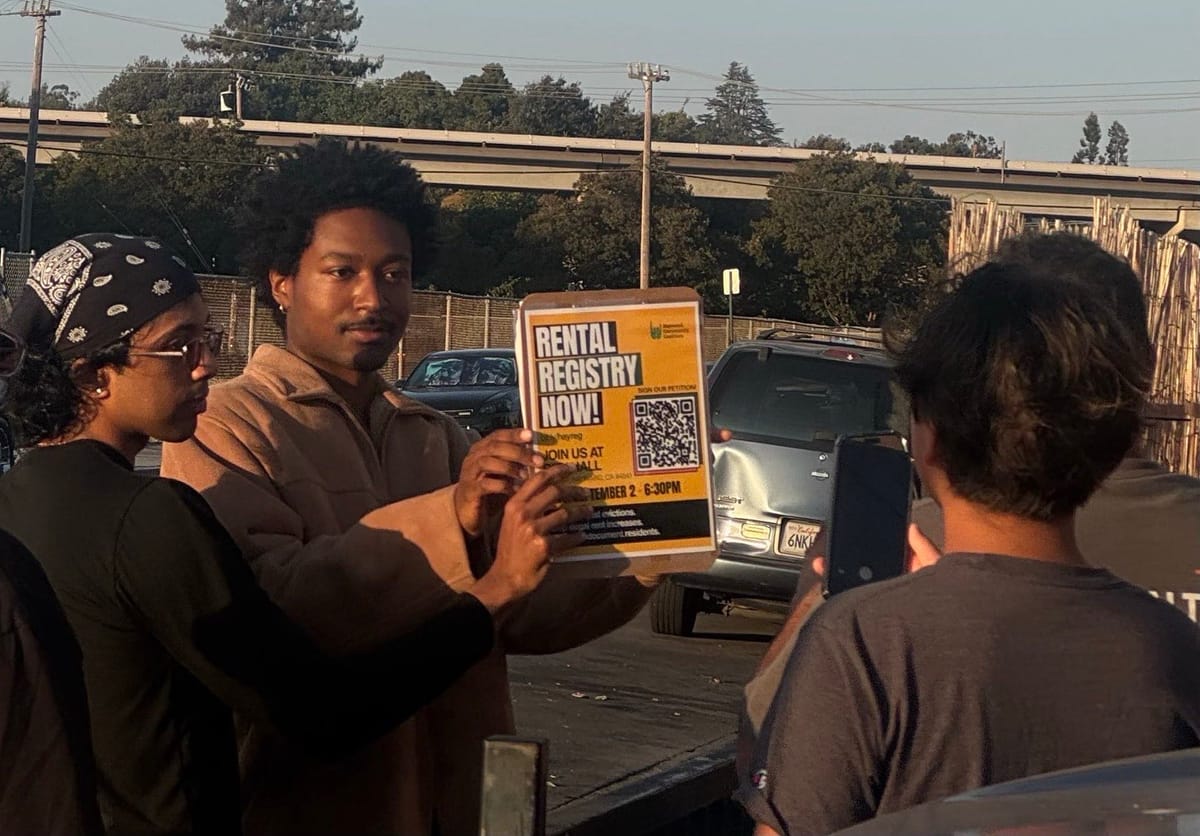
So if you want Hayward to have the best rental registry possible, consider signing the petition below and joining me in-person at the September 2 City Council meeting.
Calvin Wong is a lifelong Hayward resident, a Community Services Commissioner, and a member of House Hayward Now. He currently lives with his family due to the city’s high rental costs.



Comments ()