
What It Takes To Know Hayward
A birthday message to the City of Hayward, which we love for all its beauty and faults.
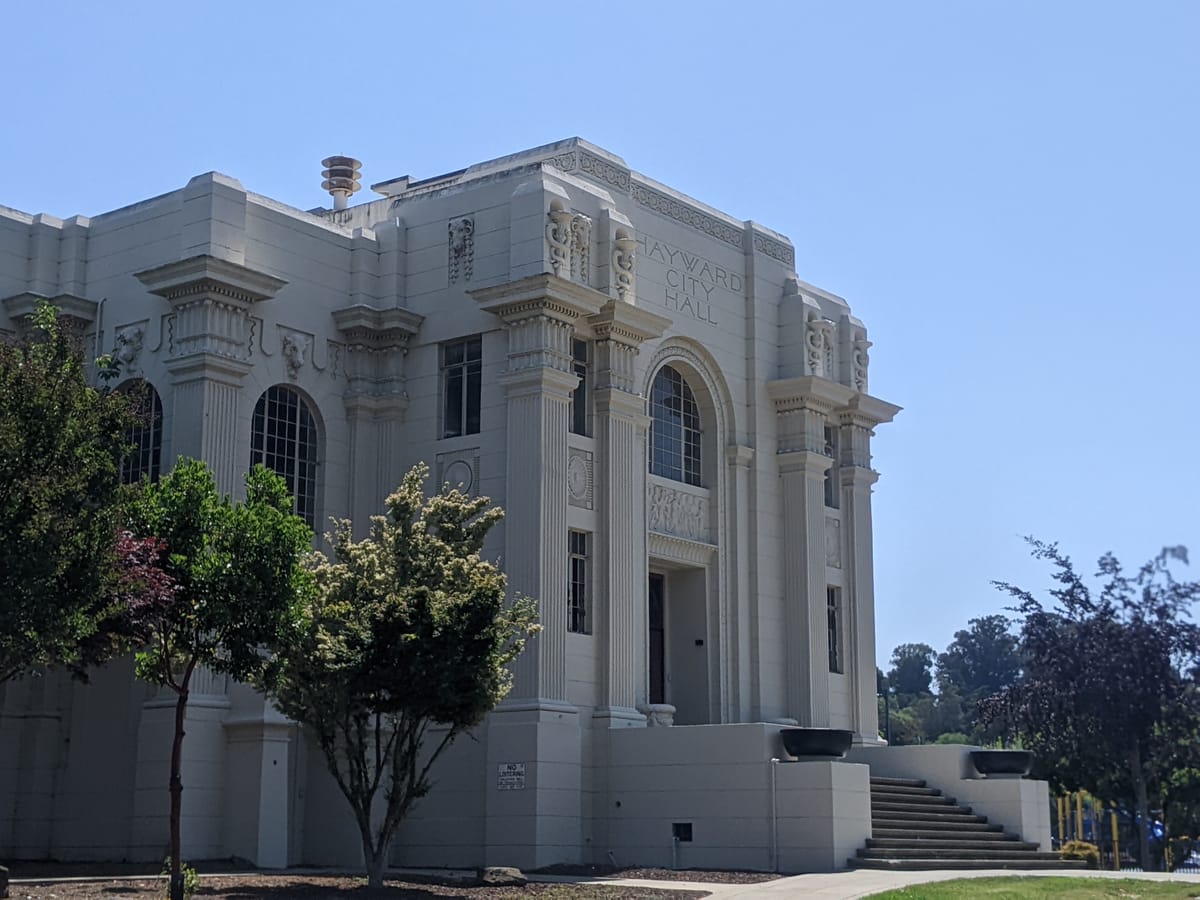
This is a slightly modified version of a story that appeared in The Tri City Voice. The idea is to celebrate Hayward's 150th Birthday, which is today. We don't usually do three posts a week, but we figured celebrating a birthday could be an exception.
I’ve gotten to know Hayward pretty well. Not because I’ve lived here my whole life, but because I made a conscious decision not to just be from Hayward but to be of Hayward. I’ve invested time learning about the people, the politics, the businesses, the schools—I’ve put down roots and gotten to know it because I love my hometown. And there’s a lot to love.
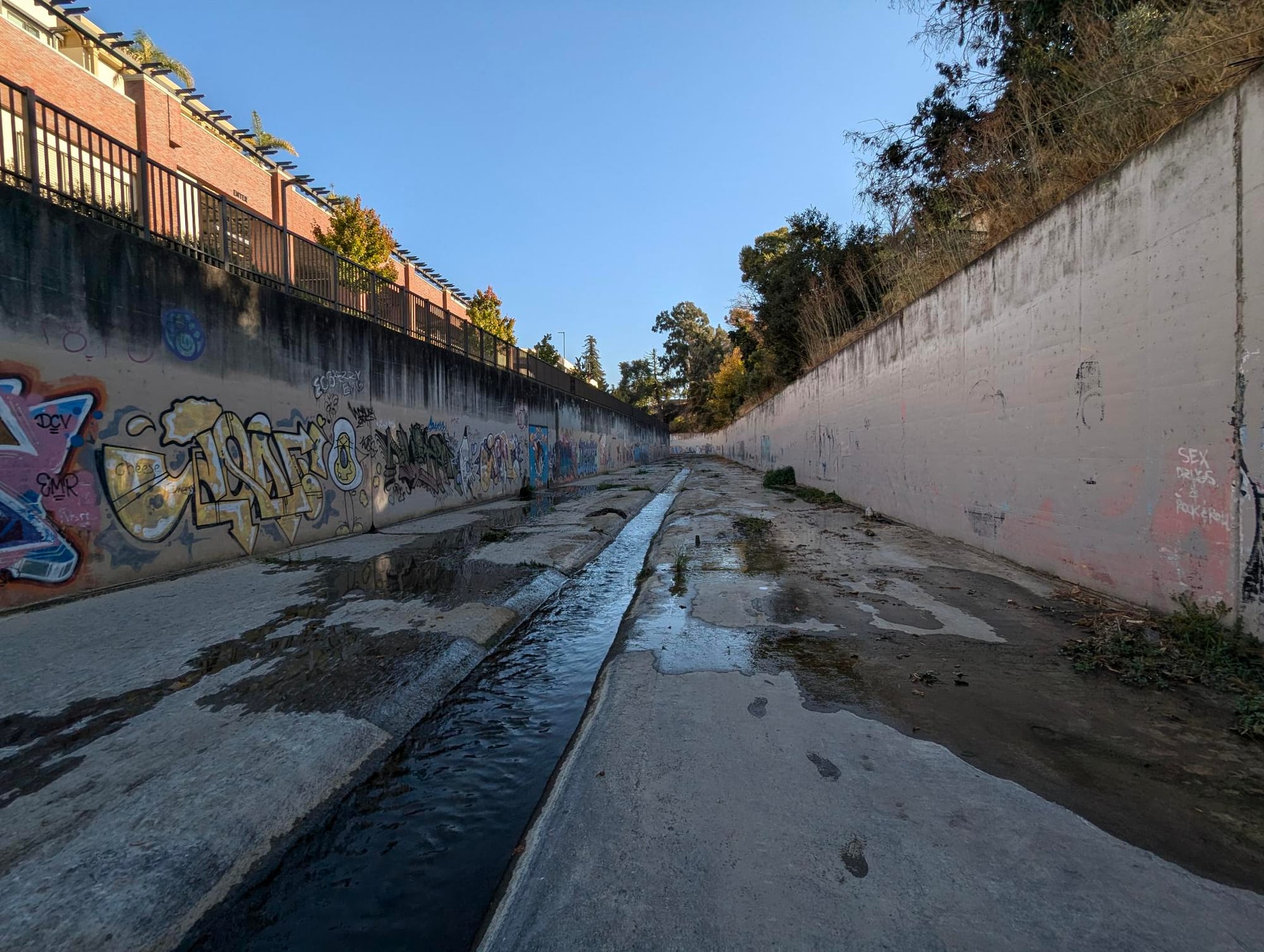
We get delicious water from the Hetch Hetchy reservoir—I may be a snob about it. We’re home to the US Boba Company, the first company outside of Taiwan to make boba. Our local pool has a bomb shelter, the graffiti along the San Lorenzo creek are works of art, we have two Japanese gardens, and we invented cherry red paint. Hayward history is just as wild.
A Sample Of Hayward History
William Hayward, a former cobbler turned gold miner, failed upward in spectacular fashion. Failing to strike it rich in the gold mines, he wooed some land off Don Guillermo Castro and built a hotel along what is now Mission Blvd. He then became Hayward's first Postmaster, as well as Roadmaster, and County Supervisor, using his positions to literally move California highways to boost his business.
Early Hayward didn't fool around, either. Residents in the 1860's stole a church from a local priest named Father Zacharias Hughes in Castro Valley to build their first school. F.D. Atherton had donated land for the rebuilt on along Foothill Blvd. where it remained as Laurel Grammar School until 1876 when it was rebuilt.
1930’s cannery workers went on strike during one of the largest strike waves in US history. Over 150 men and women walked out to protest wages below the minimum wage ($10.48/hour in today's money). The protest was violently disbursed by County Sheriffs with clubs and gas grenades.
Russell City, later incorporated into Hayward, was a mandatory stop for West Coast Blues artists. This was despite being ignored by Alameda County resulting in unpaved roads and limited access to running water. Russell City would later be swept up in racist Urban Renewal fervor that led to homes being firebombed and residents forced out by eminent domain. It was eventually annexed by the City of Hayward and turned into an industrial park.
Residents in the 70’s fought against a highway expansion that would have decimated the ridgeline. The resulting fight left the land in limbo, with vacant homes turned to wrecks because CalTrans still owned the land they were sitting on. We're still feeling the effects of these events today.
What Everyone Loves
Today, we’ve got an incredible food scene ranging from Michelin recognized Mexican, to Palestinian pizza, to every Asian food you can think of, plus old local spots that have been around for 50 years—or at least look like it. The diversity and quality of the local food scene in our little suburb is really something special.
We’ve got a local art scene, championship-winning school sports teams, a top-tier parks and recreation district, and so much more that I’m discovering every time I walk out my door. The best part about living in Hayward is that no matter how much I learn, I always hear about something new when I talk to someone.
The Ugly Happens, Too
All of this is what makes me love my city. But like a lot of things 150 years old, it has rough spots, too. The Loop ruined our downtown by encouraging people to drive through it to avoid traffic on 238. But the city is trying to address that, at least.
Too many neighbors are unhoused—a side-effect of the high cost of living—and it causes friction between the city and service providers, especially around Weekes Park.
Franchises are replacing independent shops—likely because of high rents in new commercial spaces. And our school and city both have massive budget problems from both internal mistakes and national-level changes beyond their control.
But none of these problems change how I feel about this city.
Learning Is How You Love
It’s been a lot of work to get to know Hayward so well—from its messy history to its equally messy present. I’ve read books and newspaper articles and talked to residents and watched meetings—so many meetings. But most people won’t try that hard to get to know the sixth largest city in the Bay Area; they shouldn’t have to.
The Hayward Herald is the result of hard work from people who love Hayward and call it home. If you like the work we do, please consider supporting us however you can so we can keep bringing you news and information you won't find anywhere else.
Almost since it was founded, Hayward has had a local newspaper—it even had two for a while: The Hayward Journal and the Daily Review. But the Journal closed up in the 50s and in 2016 the Daily Review was eaten by the Bay Area News Group and its downtown office was vacated. With the East Bay Times focusing primarily on Oakland and farther afield, most residents know more about what’s happening in foreign countries than their own city.
That’s why I started the Hayward Herald in 2023. I want everyone who lives here to get to know the city I love so much—good and bad. So raise a glass with me to Hayward’s 150th birthday. Let's make the next 150 years newsworthy.
Comments ()