
Council Studies Data Center Impacts And Oversight
The Council Sustainability Committee hears staff research on data centers, which paints a complicated picture. But the community and Council are aligned on pushing for independent oversight to protect the community from harm.
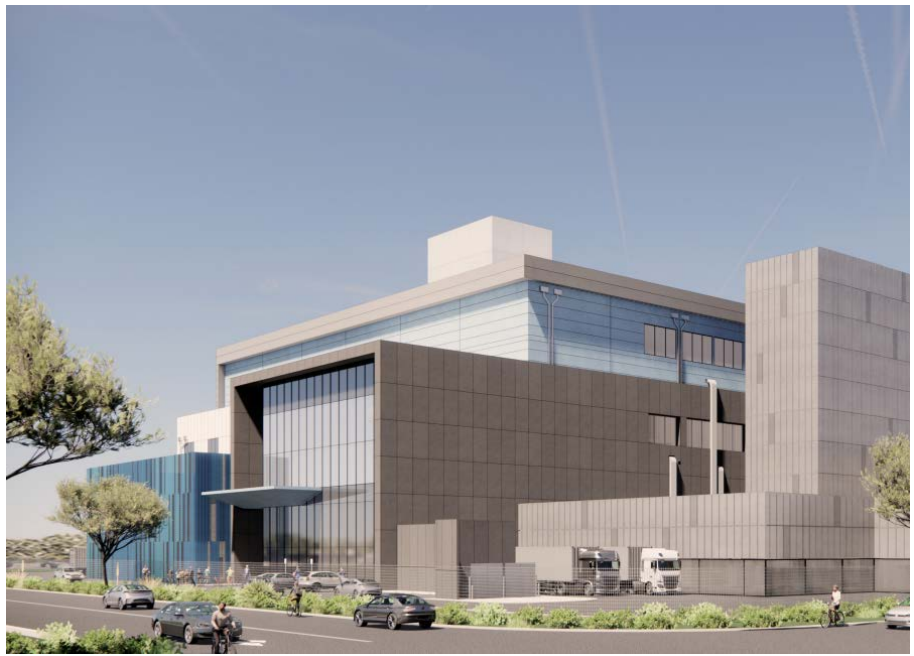
During the November 12th Council Sustainability Committee meeting, three members of the City Council received a report on the impacts of Hayward's existing and planned data centers, and laid out areas for future monitoring. The staff report said that water isn't a large concern for Hayward's data centers and that, counterintuitively, more power use could lead to lower rates with PG&E. However, the report did point out that economic effects were mixed and that noise pollution requires more research.
Residents were supportive of independent oversight of data centers during public comment, and committee members agreed. They supported reporting for a number of things, including water and power use, and air, noise, and heat pollution. Although the monitoring may cost the city money, committee members felt it was more important to reassure residents and ensure safety and compliance for existing and future data centers.
A Complicated Picture For Data Centers
After weeks of research, city staff presented the initial findings of their research on data centers both generally and specifically in Hayward. The results of which, in many ways, countered the fears which had been expressed by residents during previous City Council meetings. For example, the city appears to be unconcerned about additional water use from data centers. The three existing data centers use 14 million gallons of water per year, 5 million of which is for landscape irrigation. And Stack is expected to only add 3.1 million gallons of use including landscape irrigation, which is the equivalent of only 55 homes.
Staff reassured the public that any waste water would go through the same treatment as all other wastewater before being discharged into the Bay. This, pointed out Public Works Director Alex Ameri, is different than other jurisdictions where data center wastewater has been released into the drinking water. The wastewater would also be heavily monitored, just like all industrial water use, for a number of different chemicals—including PFAS when the city has that capability.
The Hayward Herald was the first outlet to cover local data centers, and we know it hasn't been resolved yet. We cover local news you won't find anywhere else because we live here, too. If you like the work we do, consider supporting us by becoming a paid subscriber.
But electricity use is still extraordinarily high. Assuming 65% of peak utilization, when Stack comes online next year, total data center electricity use is expected to hit over 806,000 Mwh per year. For comparison, in 2024 before the smaller Exchange data center came online, total use for the City of Hayward was over 673,000 Mwh per year. Stack and Exchange alone are expected to use more than entire city's power usage would be without any data centers.
However, according to staff, that may not be a bad thing. The presentation said that data suggests that rates actually decrease with increased power usage. PG&E allegedly estimates that for every 1,000 Mwh of additional use, rates will drop by 1% because of "improved utilization of existing grid infrastructure." While PG&E has been wrong and misled communities before, new state laws have been put into effect to protect ratepayers from increases due to data centers.
When it comes to air pollution, the 27 Tier 4 generators—the highest efficiency rating—running for up to 50 hours per year—the maximum allowed by the state for testing—will release around 900 metric tons of CO2 per year. This is far below the 10,000 metric ton limit per site imposed by the Bay Area Air District. But any noise from the generators is difficult to pin down, either. There is currently no noise monitoring and there have been no complaints regarding the existing data centers, but Stack is significantly larger. Noise pollution is also very site-specific and will likely require a consultant to get a baseline for any future monitoring.
But the financial benefits for the city are much more clear. Stack is expected to generate at least $5,000,000 in additional revenue for the city, bringing the total amount from data centers in Hayward to over $13,000,000 per year. When it comes to job production, Stack is replacing businesses that employed around 175 people while only providing 41 jobs in return. Stack alleged that a similarly sized light manufacturing facility would only employ 21 people, while the staff report estimates that a facility of that size would employ about 80 people.
Furthermore, the report indicated that default credit swaps may signal that investors see risk in building more data centers. This came before the recent resignation of Nvidia CEO Jensen Huang, which has revealed even more evidence that the graphics card manufacturer may have been propping up the AI bubble—which his departure may be popping.
Regardless of whether or not more data centers are built in Hayward, the report complicated the picture of local data centers beyond sensationalist headlines. They also signaled an openness to robust monitoring and, at least in the written report, maintained some skepticism of self-reported data from the for-profit companies.
Council And Community Support Robust Oversight
After a battery of questions from committee members, public commenters asked pointed questions about the data center information and called for robust independent oversight for the safety of the community. The comments were much more measured, asking questions and pressing for oversight more than calling for an outright ban. However, it was clear from the tone that many people had a dim view of data centers and were skeptical of future development.
The committee members took a measured tone while still pressing city staff for robust monitoring in order to reassure local residents. This includes creating some kind of public reporting so residents can keep an eye on things. "We want residents to know that we are working for them and with them," Councilmember Francisco Zermeño said, "so that they feel that we are listening to them."
Councilmember Julie Roche repeated almost all of the questions asked during public comment to ensure that they were answered by staff as immediately as possible. She got clarification that any violations would follow the existing code enforcement process, that staff hope to provide information to the extent allowable by law on a public landing page of some kind, and that the city would study things like noise and heat. "If we put a proper monitoring and regulations in place," she said, "then maybe we can move forward in a way that is responsible in Hayward."
Councilmember Dan Goldstein also called for robust monitoring and clarified the difference between buying Ava R100 and generating 100% renewable energy for the site. As he put it, the grid can't control every individual electron, so buying the R100 makes sure that enough renewable energy is available on the grid for the data center. "Making sure the supply is meeting the demand," Environmental Services Manager Erik Pearson said.
Councilmember Zermeño also took time to point out the difficulty in managing demand for data centers with the desires of the community. "We dislike data centers," he said, "but we like and survive with data centers because we want it right now. So there's that bit of irony." Given recent events, it's unclear whether any new data centers will be financially viable in Hayward if the AI bubble is near bursting. But the City Council and residents have made clear that the ones already here need independent oversight.

Comments ()