
Planning Commission Approves BACS Expansion
A Mental Health Rehabilitation Center is coming to Depot Road, and General Plan amendments could allow for denser housing downtown.
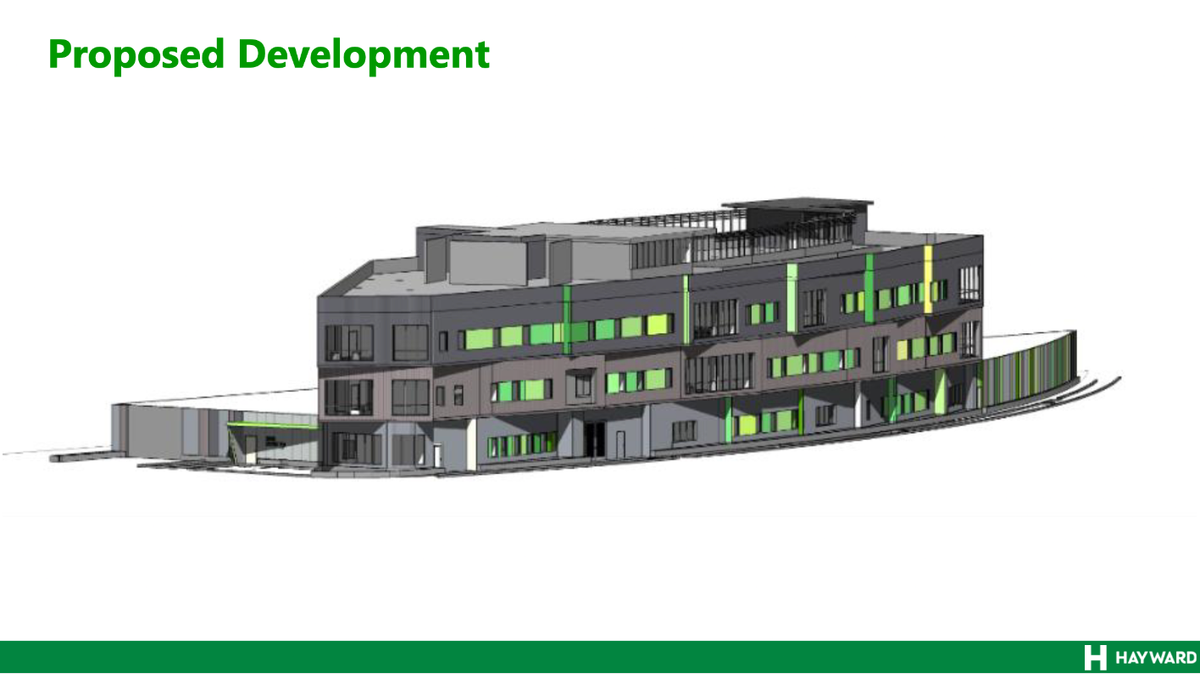
Hayward Planning Commissioners unanimously advanced two items during the August 27 meeting: approving an expansion for BACS new Mental Health Facility on Depot Road and recommendations to update downtown zoning. Through both discussions, commissioners raised broader questions about public engagement, the limits of their authority, and how seemingly routine planning decisions could shape Hayward for years to come.
BACS Expands On Depot Road
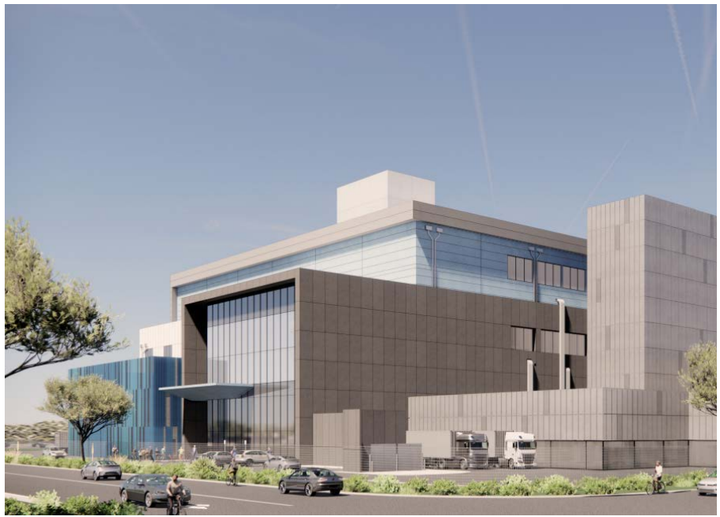
Planning Commissioners received a presentation from city staff on a Mental Health Rehabilitation Center coming to 3788 Depot Road. The industrial site was previously used as an auto wrecking and towing storage facility until 2014, when the city used eminent domain to expand Whitesell Street. The parcel remained vacant until November 2019, when BACS opened the Hayward Housing Navigation Center, which later relocated to Regis Village on Mission Boulevard in May 2026.
What shows up at the Planning Commission can have big impacts down the line and the Hayward Herald is the only local news outlet covering these stories. If you appreciate the work we do, consider supporting us with a paid membership!
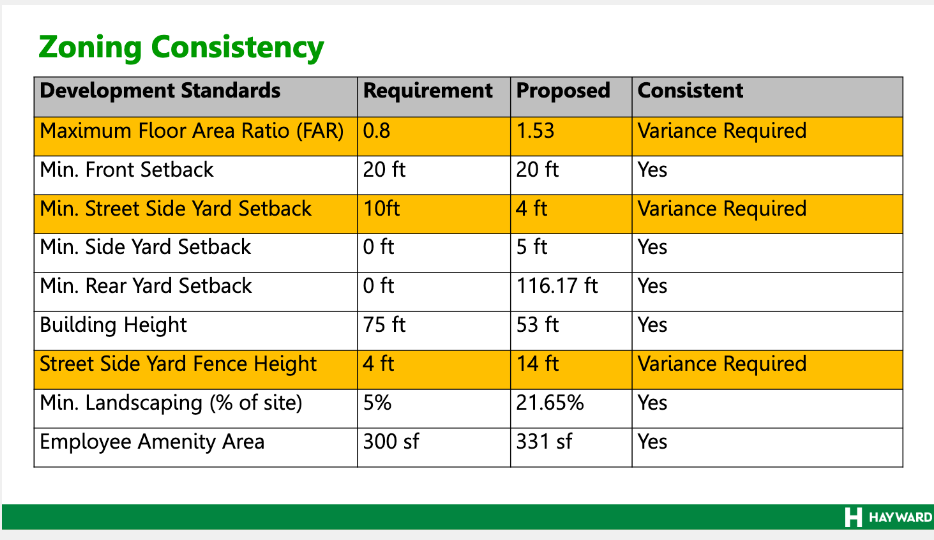
BACS now seeks to redevelop the site with a new three-story, 65,000 square foot facility featuring offices, program and staffing facilities, 83-patient rooms, rooftop and ground-level courtyards, and 14-foot-tall security fence with decorative features. Given the irregular shape of the parcel, BACS requested variances for Maximum Floor Area Ratio, Minimum Street Side Yard Setback, and Street Side Yard Fence Height. City staff recommended that the Planning Commission approve the requests, due to the parcel's unusual shape.
At the conclusion of the staff presentation, BACS CEO Jaime Almanza, who has led the nonprofit for 16 years, introduced herself and the organization. BACS has served Hayward since 1981 and currently operates 15 programs and projects throughout the city. “As challenging as the times are right now, this is such a needed project for our most vulnerable constituents residing in the city of Hayward and in the county of Alameda,” Almanza said.
Commission Ron Meyers questioned multiple aspects of BAC’s project, raising more questions than other commissioners. He repeatedly touched on whether the commission’s decision could affect the proposed use of the property. Staff reiterated that the property meets industrial zoning requirements and that the proposed use is allowed by right under California Welfare and Institutions Code. They also reminded commissioners that the property’s land-use was not what is being considered.
Commissioner Meyers further asked about the proposed uses within the building, the need for a 14-foot security fence, and anticipated staffing. He also asked what would happen if the commission denied the requested variances. Staff explained that commissioners would need to provide evidence supporting a denial and that BACS could appeal the decision. “I live in the neighborhood. It’s been a wide topic and I’m trying to represent as many questions from the public as I can right now,” Commissioner Meyers said. Staff asked that the discussion focus on the topic at hand as opposed to broader questions about land use.
Commissioners appeared cautious about the approval process following public backlash over the STACK Infrastructure data center. Commissioner Jeffrey Haman asked whether the commission had adequate time to review additional project materials after the agenda was published. “Just for the record, I like this project. But in regards to the items received after the published agenda, given the current environment the planning commission seems to be navigating through at this time, I’m a little uncomfortable perhaps, approving a project that I’ve had very little time to read over a thousand pages,” Commissioner Haman said. Staff clarified that the additional materials had been provided at Commission Meyers’s request and had no bearing on decision regarding the requested variances.
Commissioner Anika Hardy asked, “Since there was just the one community member who spoke up about this, I’m just wondering if this were to be passed, what if any plan there is for outreach.” Staff said that Hayward does not send notices after project approvals but is available to answer questions the Planning Commission may receive. Almanza added that BACS has a dedicated Community Engagement Team and has hosted various events to engage neighbors in projects and programming and that BACS takes community engagement seriously. “Neighbors have my phone number, my cell phone, and our leadership teams and it’s on our website. And so we can’t be successful if it’s not for us being good neighbors,” Almanza said.
After a lengthy discussion that extended well beyond the scope of the request, Commissioner Stevens moved to approve the variances. “First off, I’m sort of depressed because this land-use would have fit a nice data center, nice 25 or 30 megawatt data center,” Commissioner Stevens said. “That would have been great. But in all seriousness, I’m really excited. I think it’s a really creative use of a site”. Commissioner Hardy seconded the motion, which passed unanimously.
Resolving Downtown’s Land-Use Inconsistencies
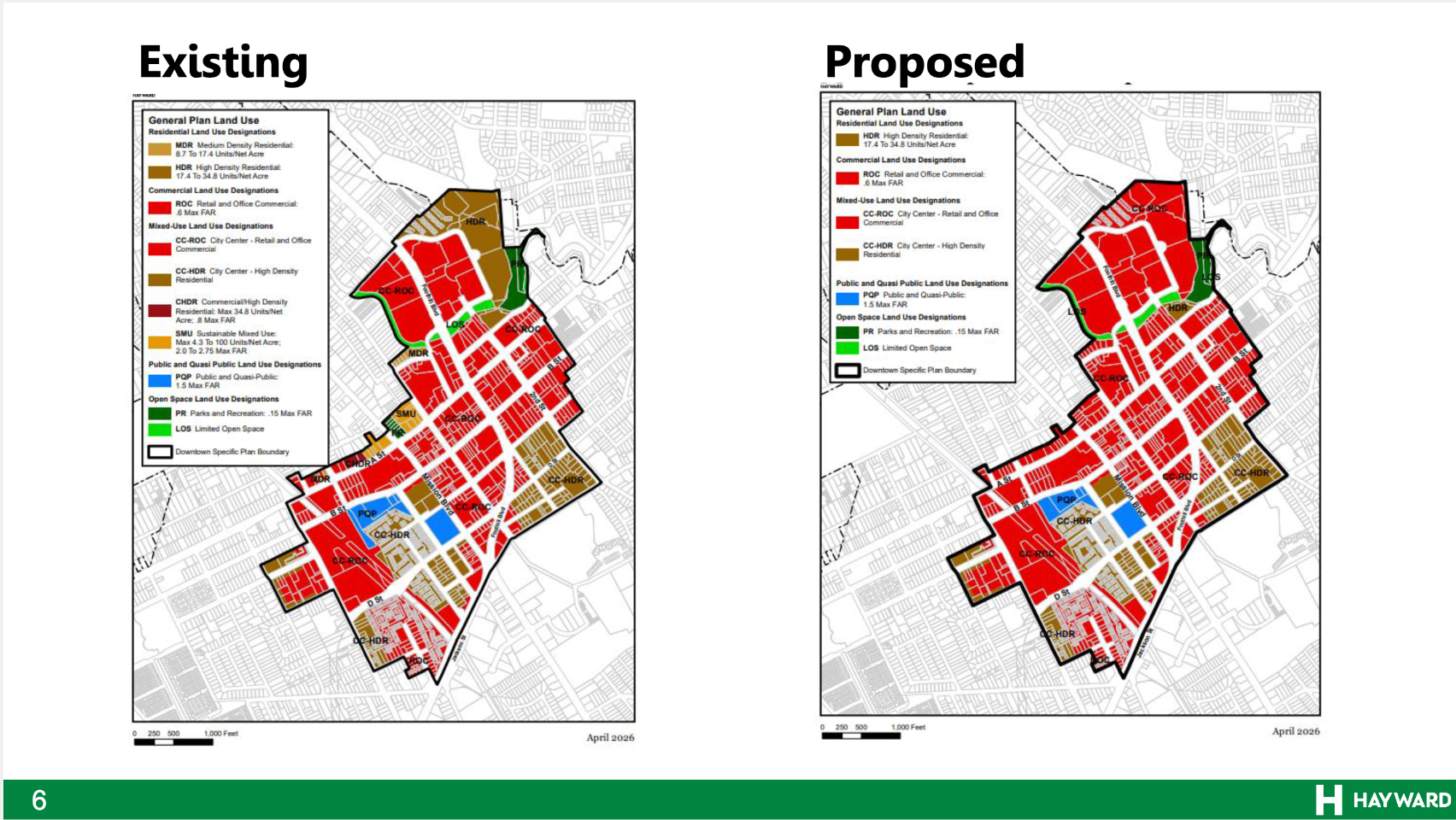
Commissioners received another staff presentation on proposed changes to the General Plan and land-use maps to resolve conflicts with the Downtown Specific Plan adopted in April 2019. The changes would make the city’s planning rules more consistent and clarify what types of development are allowed on impacted properties.
The General Plan would be amended to establish minimum and maximum residential densities for City Center-Retail Office Commercial (CC-ROC) and City Center High Density Residential (CC-HDR) land-use designations. Staff recommended a minimum of 40 dwelling-units and a maximum of 210 dwelling-units per acre, consistent with California Senate Bill 79. The law took effect in July 2026 and allows greater residential densities, building heights, and floor area ratios within a half-mile of transit by right. Previously, there was no minimum dwelling-unit requirement, while the maximum was 110 dwelling-units per acre. Staff also proposed remapping 130 downtown parcels to CC-ROC, along with seven Parks and Recreation (PR) parcels, and the Bart-owned parcel near the Downtown Hayward station.
Commissioners asked whether property owners were notified of the proposed redesignation of their parcels. Commissioner Haman questioned the notification radius and whether all 130 property owners were notified. “It seems like there’s a lot of concern about the public not being informed about these things and I was just wondering if it’s possible for a larger area of the Hayward population to be notified about this,” he said. Staff reiterated that the city follows local and state noticing requirements and that Hayward’s municipal code requires additional courtesy notices to nearby properties when development applications are received.
Commissioners also questioned how the amendments could affect building heights and why PR parcels were included in the proposed changes. Commissioner Meyers asked about the height of future projects. “Does [SB79] not allow for nine-story buildings where our downtown code allows for seven-story? And if that’s the case, does that mean we’re going to sometimes have nine-story buildings around?” he asked. Staff confirmed that nine-story projects could be possible downtown if developers pursue approval under SB 79. Commissioner Hardy also asked how the seven PR parcels became inconsistent with their current land-use designations. Staff said that they could not determine exactly how the inconsistency occurred, but that many of the properties have been non-confirming since the 1920s and the proposed amendments would bring them into conformity.
Throughout the meeting, commissioners repeatedly returned to questions about the extent of their authority and how the decisions before them could affect future land-use. Commissioner Stevens closed the discussion by raising concerns about the long-term consequences. “This is like a major land-use thing, right? And so, this seems really minor now, but I don’t know 5, 10, 20, 30 years from now, there’s going to be people that are frustrated,” he said. He pointed specifically to the Metropolitan Transportation Commission’s (MTC) use of regional transportation funding to influence local land-use policy. “We don’t even have a person from Hayward on the MTC,” he said, “These decisions are made by people that live in ivory towers and real people are not really apprised of these things, and the repercussions aren’t tonight. They are what happens in the future.” Commissioner Lowe moved to recommend approval to City Council for final review and approval, with Commissioner Hardy seconding the motion and passed unanimously.

Comments ()