
Rental Registry On Hold As Costs Increase
The cost of a rent registry appears to be increasing over time, both to the city and to landlords. And a transit-oriented development takes its first baby steps at Downtown Hayward BART.
During the final Housing Policy And Resources Committee meeting on June 29th, the committee received an update on the Rental Registry System proposal which was put on hold last September. Although neither the recording nor the presentation have been posted at the time of this writing, the staff report recommends putting off the registry due to the city's financial position and the coming Business License Tax increase.
Despite changes to the plan which include a third-party software solution to reduce the administrative burden on city staff, the cost has increased from approximately $250,000 for two staff last September to between $230,000 and $350,000 to the General Fund. Staff asked for another year to research revenue options to help cover the cost to the General Fund.
A Popular Idea But At What Cost
The last time the rental registry came before the City Council, the deficit had only just made itself clear weeks earlier. During the City Council meeting on September 2nd, members of the community, organizers, and tenant's rights advocates supported a rental registry because it would make enforcement of existing laws much easier.
The Code Enforcement Division is currently in charge of the over 24,000 rental units known to be in Hayward, and they're in charge of ensuring fees are paid and that tenants have a livable unit. Unfortunately, the current system relies on tenants to make complaints, which they may not do if they are not legal residents or are threatened by their landlord. A rental registry would solve that issue by shifting from passive to active enforcement.
The Hayward Herald is the only outlet following local policies that could protect your family from eviction. If you're able to lend us a hand, we'd love your support so we can keep serving our community.
At the time, city staff put forward an idea where around $250,000 would need to be paid from the General Fund to pay for a Housing Manager position and a portion of the Deputy Director of Development Services position. Staff said at the time that the remaining positions, which would provide administrative support, would be recovered by the increased fees to landlords. Unfortunately, the $30,000,000 deficit made such an expense impossible and the registry was put off for at least a year.
More Expensive By The Day
The new plan for the rental registry includes leveraging a third-party software solution used by multiple other cities throughout the Bay Area. According to the staff report, this would provide a call center for landlords who have questions about registration, payment, and general administrative requirements. "[This] would streamline the City’s clerical responsibilities and reduce administrative burden that would otherwise require hiring additional administrative staff," the staff report said.
Unfortunately, despite any streamlining, the cost would increase both for the landlords and for the city. Increased salaries and benefits have pushed the cost from $250,000 to up to $350,000. Despite the additional fees charged to landlords, including an annual registration fee on top of the increased Rent Review Fee, the extra money would still need to come from the General Fund.
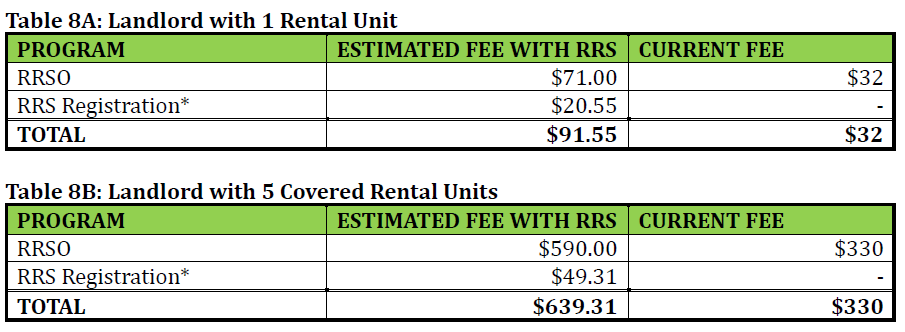
The additional fees to landlords also gave city staff some pause. The new Business License Tax rate, set to be on the November ballot, would force residential landlords with between 1-3 units to pay a Business License Tax for the first time. While the average would be less than $120/year, staff acknowledged that adding a second fee on top of the Business License Tax may cause landlords some heartburn.
Landlord Lobby Isn't Keen On New Fees
According to the staff report, the East Bay Rental Housing Association (EBRHA) suggested that the city create some kind of process to streamline fees through the Business License Tax. Unfortunately, the staff report points out that it's infeasible. "Streamlining through the business license tax process would neither result in granular data for unit-by-unit rents nor provide a proactive enforcement of the [Residential Rent Stabilization Ordinance] RRSO."
At the same time, tenants and tenant's rights advocates have been supportive of a rental registry. They say it would prevent unlawful rent increases—since rents would have to be reported annually to the city—and would deter displacement.
Previously, the City Council was mostly supportive of a rental registry. However, without the recording it is unclear where members of the City Council stand several months later. Councilmember George Syrop has been a vocal supporter of the registry, in part because he is a renter himself. It's likely that finances remain the primary roadblock, but the City Council was also supportive of Accessory Commercial Units before suddenly changing course months later.
Development In Works For Hayward BART
During the June 23 Council Infrastructure and Airport Committee meeting, a representative from BART outlined the first step of outreach for a proposed transit-oriented development at the Downtown Hayward BART station. With an aim to improve housing availability and affordability, reduce congestion and pollution, and increase accessibility to BART, the development could be a huge win for both BART and the City of Hayward. Unfortunately, this is just the first step in a long process—negotiating the entitlement alone may take two years or more.
Activating A Long-Vacant Lot
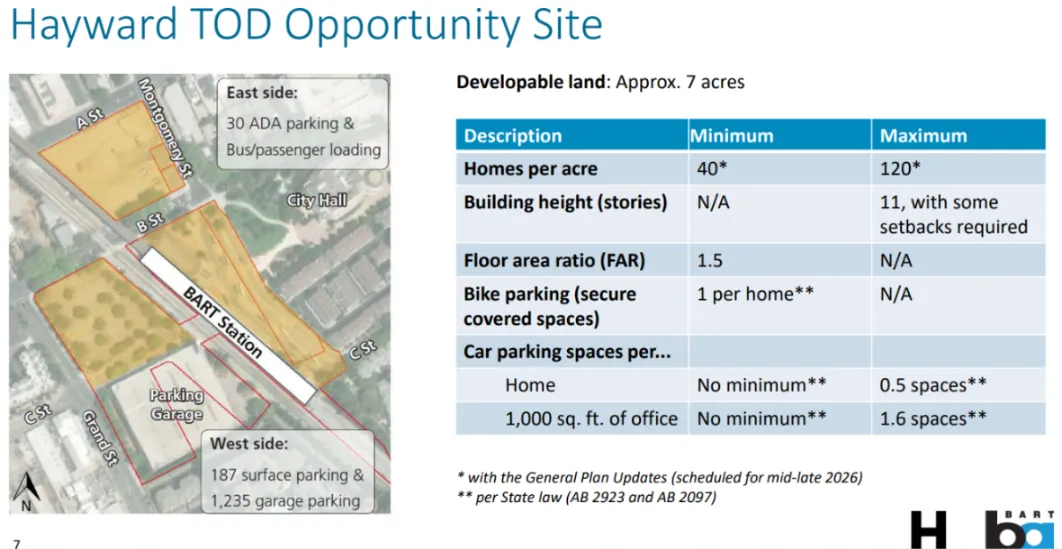
The plan is for BART to begin the process of developing 7 acres of the site at Downtown Hayward BART. While BART itself does not develop the property, they plan to enter into a long-term land lease with a developer. This will help BART earn some ongoing revenue while avoiding getting into the home development business.
Numerous state and local laws govern how dense the development can be, how many parking spaces are able to be built, and more. But BART is dedicated to having at least 20% being deed restricted as affordable to low income residents. The relatively good news is that the existing parking garage on Grand Street is usually only at 26% capacity, so removing the 187 surface parking spaces would not unduly impact existing commuters.
The People Support Affordability And Downtown
BART conducted extensive outreach, both in-person and online. In-person respondents supported creating a vibrant first impression for Hayward's downtown and providing affordable units to residents. They were also interested in boosting BART ridership and transitioning people away from cars and onto public transit.
Online responses were also interested in providing a good first impression of Hayward's downtown, but appeared to be more focused on creating a more coherent connection between downtown and BART and the benefits it would bring to local businesses. They were also interested in creating a transit-oriented hub around the BART station and densifying housing in the area.
While the desires aligned overall, there were some concerns, as well. Parking availability, building height, earthquake risk, and the risk of vacant ground-floor retail were all concerns voiced by respondents.
Councilmembers Worry About Ground Floor Retail
The concern about ground-floor retail was also shared by members of the City Council. Councilmember Angela Andrews cited another BART development near McArthur which she said had lots of vacant ground-floor retail. The BART representative said that that development was planned pre-COVID when there was a different retail landscape, but future development would likely take current trends into account.
Councilmember Andrews suggested some kind of live/work arrangement and worried about the continued car-centric nature of Hayward potentially hampering any ground-floor retail development. Councilmember Syrop also worried about ground-floor retail, supported the idea of a live/work arrangement and suggested meeting spaces or community/co-working spaces which are in high demand in Hayward.
Mayor Mark Salinas pitched an idea of an Education City Village which he and local education administrators had envisioned for the site. He envisioned some kind of workforce housing with a commercial use like a childcare center or live/work arrangement. He also did not view ground floor retail favorably. "I don't know what the magic sauce is with ground floor commercial," he said.
The committee ultimately supported the project and Mayor Salinas said he would likely be an advocate to the BART Board of Directors.


Comments ()