
Residents Rally Against Dispensary
In Which: A second cannabis dispensary seeks Foothill Blvd location, Public commenters overwhelmingly oppose it, and Commissioners worry about parking
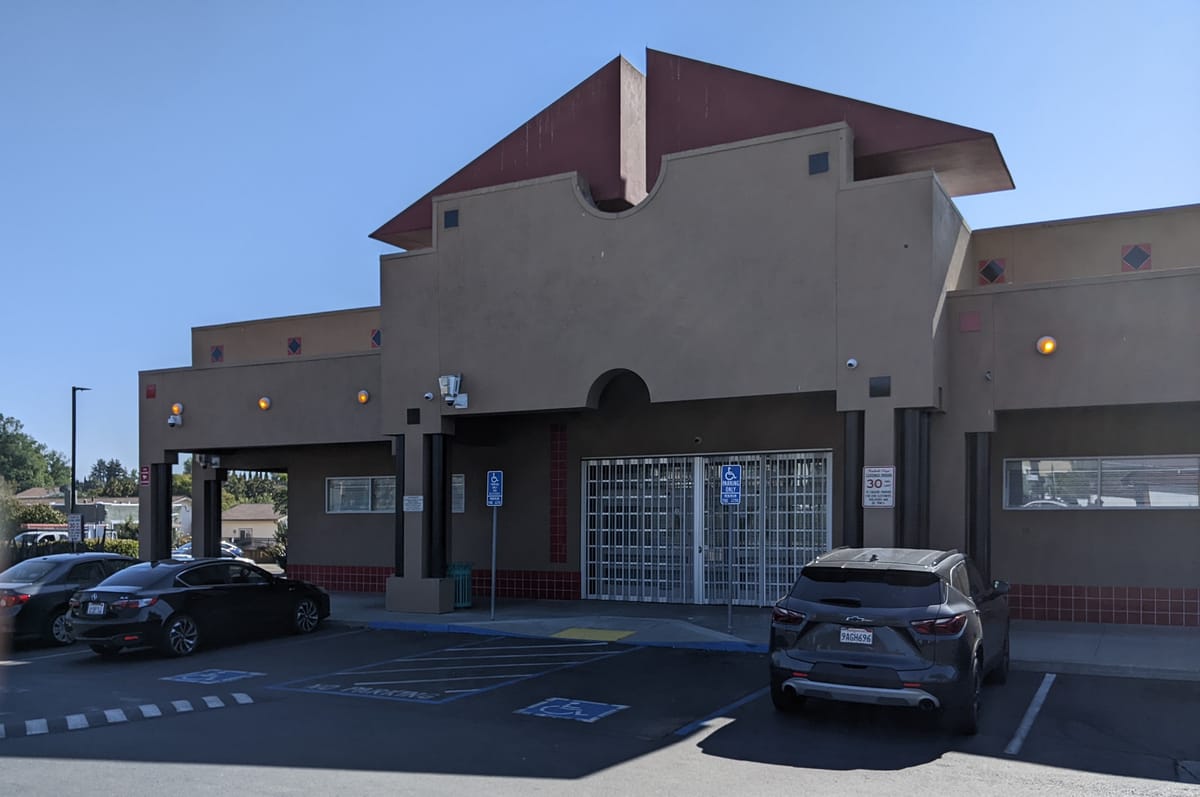
A proposed dispensary at the location of the old Walgreens on Grove and Foothill brought outcry from local residents. Over 30 people gave public comment during the most recent Planning Commission meeting, mostly against the proposed Phenos Hayward dispensary. While the final decision on whether or not to approve the Conditional Use Permit (CUP) lies with the City Council, the Planning Commission ultimately recommended against approving it, due in part to public outcry.
The Second Dispensary In Hayward
Long-time watchers of City Hall may recall that, in 2017, the City Council approved a process for legal cannabis businesses to open within City Limits. The idea, much like other municipalities, was to provide legal access to cannabis in exchange for increased tax revenue. Many cities, including Hayward, expected tens of millions of dollars in tax revenue from cannabis sales.
However, that never really materialized. For commercial dispensaries, according to City Staff, the City Council initially pushed to centralize them in Downtown. However, due to distance requirements—initially a dispensary needed to be more than 1,000 feet from another—and a lack of available retail space, the City Council agreed to reduce the distance requirement to 500 feet and expand the areas where dispensaries can be located. Now they are allowed in any Commercial Zone like any other retail business.
The Walgreens location is very large, around 15,000 square feet, though according to the applicant the dispensary would work on a kind of “Costco model”. The majority of the space would be dedicated to storage, while the actual retail space would be closer to 1,400 square feet. The business would be open from 9am-5pm, have at least 3 staff on premises, 2 armed security guards, and 24/7 security coverage. There would be no on-site consumption allowed, and there would also be no delivery.
Many commenters and Commissioners noted that it is fairly close to the existing dispensary, Garden of Eden. However, not only is Garden of Eden located in Unincorporated Alameda County, it is approximately 600 feet away which exceeds the City-required buffer.
Safety And Security Are Top Concerns
Many Commissioners asked about Phenos’s security plans. Commissioner Lowe asked for more details about the security measures, which include internal and external security cameras and armed security who will both act as a crime deterrent and check IDs to ensure access is limited to those 21 and over or 18 and over with a valid prescription. Detective Gabriel Wright from the Hayward Police Department said, “The Police Department has reviewed [the plan] and this met our standards.”
Commissioner Lowe asked if similar security was needed at tobacco, liquor, and vape shops, but Detective Lowe said that was not the case. Liquor stores in particular frequently carry non-alcoholic items that are sold to those too young to drink. However, anyone entering a dispensary needs to be 21 or older.
Commissioner Lowe asked if the security guards were trained in any kind of particular way, but Bert Sarkis, a representative for the project, stressed that guards have to be certified by the State of California and undergo additional training to be armed. He also stressed that they submitted a stringent security plan, a camera plan—with cameras accessible to HPD at all times, alarm system, secure waste storage, every employee undergoes background checks, and the facility itself undergoes regular inspection from HPD. There are also plans for odor control and, if there are any issues with compliance, the permit can be revoked.
Commissioner Meyers asked why the guards were armed. Mr. Sarkis said that it’s mostly to check IDs, discourage loitering, and stop public consumption. But he also recognized that it was important to prevent theft and burglaries. Commissioner Meyers then asked if cannabis was valuable, to which Detective Wright said, “Yes, cannabis is a highly sought after product.”
Don’t Fly Right, Get Your Permit Revoked
Commissioner Lowe then asked if Cookies, the only existing retail dispensary in Hayward, had created an increase in calls to Police. Detective Wright said, “[It] doesn’t appear that they’re contributing to more calls for service.” Planning Manager Lochirco also pointed out that if that had been the case, their permit would have been revoked.
Commissioner Stevens said that 38 calls for service had used B and Main—where Cookies is located—as a location. Detective Wright said that incidents may use that address or location, but that doesn’t mean the incidents were linked to the business itself. He then asked if calling the Police because of a smell of cannabis would count as a call for service. Detective Wright said, “If you called in, that would count as a call for service.” But she also recognized that if you can’t determine where the smell was coming from, it would be difficult to arrest anyone for public consumption.
Commissioner Stevens then went so far as to ask if someone smoking near a dispensary would trigger their permit to be revoked. Staff pointed out that cannabis can be delivered and smoked anywhere. “[That] doesn’t mean Cookies is the culprit because cannabis is so readily accessible and available.” When Commissioner Stevens asked about enforcement, Staff reiterated that excessive calls for service can start the revocation process at any time for any business.
How Much Parking Is Enough?
Commissioner Meyers asked about the business plan and the expectation that the customer base would increase from 500 to 900 people per day. The applicant said they expected it to be a gradual increase as word gets out. Commissioner Meyers then asked about lines and capacity. Ron Roberts, with the company applying, said, “I’m sure Walgreens was serving far more than 900 people per day.”
Commissioner Meyers wondered about the expected time that people would be in the store. The applicant said that they would operate under “more of a Costco-based model” and that today’s customers tend to know what they want. That coupled with changes to logistics and processes reduced the expected transaction time to 7-9 minutes. The parking lot, though shared with other businesses, has 61 spaces available.
Commissioner Goodbody asked about the traffic impact on Grove and Foothill. Staff said that the former Walgreens location “generated a lot more traffic than what this is anticipated to do.” They stressed that the retail footprint is only around 1,400 square feet.
Okay, But Why Do It Here?
Commissioner Goodbody asked what happened with Auntie Honey’s—the business that was originally going to come into a location on B Street but ultimately fell through. The applicant explained that there were issues with the City mandates and buffer zones—as explained above—and with the retail partner she was working with. That relationship deteriorated to the point of arbitration.
Planning Manager Lochirco also pointed out that many commercial buildings are owned by national corporations who don’t want to lease to cannabis businesses, because it’s still not Federally legalized.
Commissioner Yorgov asked what other sites were considered. Mr. Sarkis said that there are a lot of considerations—including corporate landlord aversion—to choosing a location, including parking, access to loading zones, and security concerns.
Thanks for reading Hayward Herald! This post is public so feel free to share it.
Chair Hardy also questioned why they settled on this particular location. Mr. Sarkis said, “This is a retail business that sells a retail commodity that should be in a retail zoned area.” He stressed that the prior inclination of many cities was to push dispensaries into industrial zones, but the buildings aren’t set up for retail and the neighboring businesses don’t want the increased traffic issues. Mr. Sarkis said the only other viable location was the former location of Hayward Tool and Equipment Rental, also on Foothill Blvd, but it lacked sufficient parking.
Commissioner Stevens felt that it’s the responsibility of the business owner to build a facility to meet their needs regardless of where it’s zoned, but Mr. Sarkis pointed out that most retail businesses don’t construct buildings from scratch and it would be a very high up-front cost.
Public Speaks Against Dispensary
Dozens of people took to public comment to speak against the dispensary. The arguments mostly focused on the proximity of the dispensary to children and the detrimental affect it could have on youth. The speakers included parents whose children attend the martial arts dojo in the same building, local residents, and at least two high schoolers.
The speakers who supported the applicant and the project, including the applicants themselves, attempted to reassure the public and the Commission that—much like Cookies—there is no exterior advertising or displays that might entice children. They also stressed that no child could get in, since ID checks are required by law for all who enter the building.
Some speakers, presumably reading from a prepared script, said that the former Walgreens site is “in a residential area where children walk to school.” However, the nearest public school is Cherryland Elementary, which is over a mile away. There is a Korean School, presumably attached to the Korean church, but that is closer to the Garden of Eden dispensary which already exists. Some charter or private institutions may be using the old Strobridge site, but the public school closed over 5 years ago.
Several speakers were also concerned that a dispensary would increase underage cannabis use, despite the robust safeguards in place to prevent that from happening. Many of the speakers appeared to be from Castro Valley, some as far as a half-mile away and up a steep enough hill to look down on the location. But the location being on the border between Castro Valley, Hayward, and Cherryland does make constituency a complicated issue.
Commission Recommends Against It Under Pressure
Commissioner Meyers called the proximity to Garden of Eden a “loophole”—despite it being far enough away to not cause concern under City ordinance. “If it was next door and it was a county line, would we have that same feeling? I think not.” He alleged that the community outcry represented the majority of the people in the area while also expressing concerns about NIMBYism. However his biggest concern remained parking.
Commissioner Meyers said he did the math that serving 900 people per day would be 82/hour—since the location would only be open 9-5, it would be closer to 112 per hour. He then relayed a recent visit to the parking lot and said, “I thought at this moment if we had 82 people right now trying to park here, we would have a serious issue.” He did not appear to take into consideration that the average transaction time would be 9 minutes, not a full hour, but ultimately used that as a reason to recommend against approval.
Commissioner Stevens expressed concern about clustering—having too many of the same kind of business close together—despite it only being two businesses. However, the majority of his comments focused on moral concerns. “In my opinion,” he said, “[cannabis businesses] have negative operational impacts.” He viewed the idea of armed guards as “not an appropriate or good thing to see in our city.” He also alleged that cannabis shop owners should be held responsible for public consumption, calling on them to “make sure their businesses are not creating a nuisance.”
Commissioner Stevens then cited figures on “cannabis use disorder” which, according to the CDC affects approximately 30% of people who use cannabis. By that logic, the many adults who suffer from alcohol use disorder should be an even larger concern and the responsibility of the numerous liquor stores and drinking establishments throughout Hayward. “The placement of these types of [dispensary] facilities on a core retail corridor, in a core gateway to the City is fundamentally poor planning,” he said.
Commissioner Goodbody also cited the adverse health affects of cannabis use as a reason for recommending the permit be denied. She specifically cited “the welfare of our City if we were to approve this cannabis CUP.” She cited a report on how cannabis impairs vascular function, but then cited the Business Friendly Hayward survey—whose respondents were not representative of the City of Hayward—and cited that they look to Pleasanton and Castro Valley “to help shape Hayward and what they would like Hayward to look for [sic].”
Commissioner Goodbody denied the recommendation because of “health and welfare impacts, traffic, and the saturation.”
Commissioner Lowe expressed concern about clustering, while also recognizing that she wasn’t sure if two locations were considered a cluster. “I am very concerned about there being another one a block away,” she said. “I would like to know whether or not having 2 is a cluster. I don’t know if having 2 is a cluster.”
Commissioner Lowe also appeared to be swayed by the idea of a school being nearby, despite there not appearing to be one. “It’s a no for now,” she said. “I just have more questions that I would like to have answered.” She did not ask more questions, however.
Chair Hardy said, “I cannot agree with that finding [that the business is desirable for the public commerce or welfare], even before I heard all the comments tonight.” She also didn’t agree that the shop would not “impair the character and integrity of the zoning district and surrounding area.” She was also concerned about parking, despite reassurances from City Staff, and appeared to have a desire to see the business pushed to the industrial areas. Ultimately, however, she listened to the public outcry.
Commissioner Yorgov—in his inaugural meeting—took a more measured approach. “Safety to children is a really big concern,” he said. But he also recognized reality. “Not approving this is not going to take cannabis out of our communities,” he said, “and I do believe this application has addressed the security concerns and that there are safeguards in place. I trust the HPD’s recommendations on safety.”
As the lone Commissioner living Downtown, Commissioner Yorgov shared his experience with Cookies. “Folks just go in there to make a purchase, walk out, maybe they take a lap around downtown—go to Max’s Cakes.” Commissioner Yorgov also touched on something the residents seemed to feel but not express directly. “This not being a Walgreens anymore is difficult,” he said, “[but] it’s not a choice between a Walgreens and a dispensary. It’s between [a dispensary and] another vacant storefront in Hayward.”
Ultimately the Planning Commission voted against recommending the permit for the dispensary, with Commissioner Yorgov dissenting. The ultimate decision, however, rests with the City Council.
Comments ()