
Russell City Takes Step Toward Justice
With the approval of the Russell City Redress Fund at both the City and County levels, we quickly cover the history of Russell City, the Reparative Justice Project, and details of the Fund.
In August, the City of Hayward and Alameda County both voted to formalize a joint agreement to begin addressing a longstanding injustice. The $1,400,000 Russell City Redress Fund, which will largely be administered by the City of Hayward, is the latest step in a long road for former residents and descendants of Russell City. While the City of Hayward approval was less high-profile, this important reparations fund was only possible due to advocacy from former residents and descendants, and local residents of Hayward.
Despite the justifiable fanfare, however, there is still a long list of justifiable demands from the affected community that need to be addressed. With that in mind, let's take a look at Russell City, take a very brief look at its history, how the redress was developed in the City of Hayward and Alameda County, and how far we still have to go.
An Vibrant Community Ignored
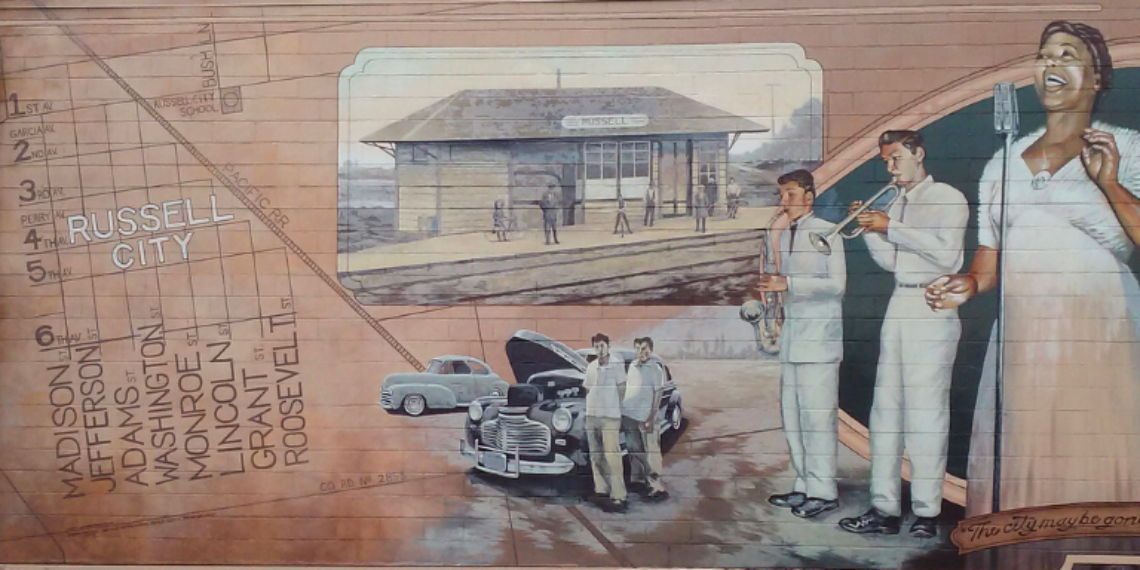
Although the European settlement of the area initially known as Russell began in 1853, it wasn't until the early 1900's, after the initial Danish farming community was subdivided by a developer, that the community now known as Russell City began to develop. It became a haven for people from marginalized communities like Indigenous Ohlone people, Japanese, Hawaiians, Portuguese, Filipinos, Mexicans/Latines, and African Americans.
One of the primary reasons the land wasn't snapped up by more affluent White interests is a lack of infrastructure, a problem that persisted for the community until it was eventually wiped off the map. Sewer systems, utilities, as well as basic curbs and gutters, were never installed in Russell City. Pictures from Russell City frequently show unpaved roads, with the local fire truck—purchased by the local community—sporting off-road tires.
Despite the lack of infrastructure, former members of the community persistently described it as a tight-knit community where, despite the smell of the local hog farm, people looked out for each other. While local governments often neglected investment in the area, Russell City did enjoy a local library, elementary school, and cultural and sports activities. They built multiple churches, opened dairy and hog farms, beauty and barber shops, restaurants, and—perhaps most famously—the Russell City Country Club.
The Country Club was a prominent venue for both Bay Area and national Blues artists from the 1940's to the 1960's. Everyone from Ray Charles, to T-Bone Walker, to Big Momma Thornton and more played in Russell City. Described as "a country shack where people went to have a good time" by Billy Dunn, it helped define the Bay Area Blues sound.
The Hayward Herald is the only news outlet with the in-depth knowledge of local history to provide the full context of local stories. If you value our local knowledge and what it brings to your news diet, consider supporting us by becoming a member.
At the same time, the region was described by neighbors as a blight and health hazard. Because of the lack of infrastructure and investment, local businesses like dumps, junk yards, and hog farms posed significant health hazards—hazards that residents themselves tried to get local governments to address. When U.S. Urban Renewal money was made available to Alameda County, Russell City became a prime target for redevelopment. Shortly afterward, Russell City experienced a wave of fires—20 in a single year—which burned over 50% of the community. Rumors persist that the fires were intentional to force residents to relocate to make way for redevelopment.
In 1968, Alameda County accepted $2,400,000 from industrial park developer Cabot, Cabot, and Forbes. Meanwhile, the County spent the majority of their payments on Santucci Hog Farms which only owned 35 of the full 200 acres of Russell City. Other residents were paid a median price of around $1,300, while Santucci was paid $510,000. But the damage was done, and soon the area known as Russell City was redeveloped and annexed into the City of Hayward.
Russell City Reparative Justice Project
Insofar as the City of Hayward was concerned, that was the state of things until 2020. After the uprising in response to the murders of George Floyd, Breonna Taylor, and others, the Community Services Commission encouraged the City of Hayward to issue a formal apology to the former residents and descendants of Russell City. The City of Hayward officially issued the apology on November 16th 2021, citing historic injustices as well as the city's dedication to social justice.
The apology was accompanied by a suggested list of 11 projects, ranging from using a racial equity lens to develop policy to creating new systems of public safety to homeownership assistance to business assistance programs. While some programs appear to have been integrated, like the racial equity lens, some of the more financially costly and impactful programs failed to materialize. Instead, the city developed the Russell City Reparative Justice Project.
The Project, which was led by a Steering Committee composed of 15 former residents and descendants of residents of Russell City, included research reports generated by professors from San Francisco State University and members of Ceres Policy Research. In conjunction with the research results, the members of the Steering Committee met monthly to discuss the research and develop a list of recommended restorative justice actions to present to the City Council.
The Project Steering Committee, represented by Aisha Knowles, presented 26 recommendations which were ranked by former residents and descendants. It was clear from the survey results that compensation and restitution were the top desires of those surveyed, including a Guaranteed Basic Income for living former residents, and property restoration or compensation at 2023 market values.
During the presentation of the recommendations, the City Council was vocally supportive of the ideas but fell short of guaranteeing any particular policy. Mayor Mark Salinas said at the time, “Your work is done... And we’re gonna move forward and see what we come up with and this will be a community effort.”
Staff Takes Over
According to the archived communications, city staff identified 10 categories of recommendations and began prioritizing them with the intention of hosting Town Hall meetings to gather input from affected residents. The proposals that were discussed at town halls were: General Basic Income and Property Restoration, Fair Compensation and Affordable Housing, Business support and Homebuyer's Assistance, and Heritage Preservation Projects and Community Center and Public Benefit Programs. These meetings continued into November of 2024 when, on November 4th, city staff announced that consideration for the programs had been postponed.
Then, in April 2025 a communication from the short-tenured City Manager Dr. Ana Alvarez explained that there had been "unanticipated challenges and community concerns" and that city staff "have been in contact with government agencies and others to explore possible partnerships. These conversations are meant to broaden options for eventual City Council action."
Communication stalled until August of 2025 when the city announced the Russell City Redress Fund, which was mostly funded by the Alameda County Board of Supervisors—of the initial $1,100,000 fund, $850,000 was contributed from individual Supervisors' discretionary funding pools. Supervisors Elisa Marquez and Nate Miley contributed further funding from their discretionary funds, and the Alameda County Office of Education also contributed.
After several rounds of last-minute generosity from County Supervisors from their discretionary funds, the final pool grew to $1,400,000.
Russell City Redress Fund
The Russell City Redress Fund was announced to much fanfare at the Alameda County Board of Supervisors meeting, but had a much more quiet reception at City Hall. Despite this, the fund will largely be managed by representatives of the City of Hayward: the Hayward City Manager will disburse the funds, and Councilmembers Angela Andrews and Julie Roche will be two of the three elected officials serving on the board alongside City and County staff, though Supervisor Marques's vote will count as two votes.
Interestingly, there will also be an "Eligibility Review Subcommittee" composed of the County Administrator, a representative selected by the City Manager, and a third member with "no conflict of self-interest" selected by the other two. They will be the ones to review applications for payments of up to $25,000.
In order to access the funds, former residents need to meet eligibility criteria of Phase 1 and apply, presumably to the email on the Redress Fund site. According to the staff report, "To qualify for Phase 1, an applicant must have resided in and personally owned residential property in Russell City between January 1, 1961 and December 31, 1964, and the property must have been acquired by Alameda County through eminent domain during that period." The funds will only be distributed once per household, not per resident.
A Good First Step
The Russell City Redress Fund is, by the city's own admission, a single step in the right direction. "Redress Fund payments to former Russell City payments are not intended as compensation and will not reflect present-day value of their property," the Reparative Justice Project site reads. "Rather, the payments are intended to be a concrete step to further acknowledge the lasting harm associated with redevelopment of Russell City."
The other 25 recommendations have yet to be addressed and, due to Hayward's financial troubles, may not be addressed for some time. This is small consolation to aging former residents, many of whom worry about how much progress will be made before they and their contemporaries pass away. But it remains clear that former residents of Russell City and their descendants continue to hold the City of Hayward and Alameda County responsible for the harm its done to them and the promises they've made to repair that harm.
For more information about the Russell City Reparative Justice Project, check out this report from the Hayward Herald in 2024 which features many voices of those involved with the project.
Correction: We updated the numbers and documentation related to the Steering Committee to reflect the final membership at the time of the presentation to City Council.


Comments ()