
Why Zohran Mamdani Can't Happen Here
Despite sweeping Socialist wins across New York, change in the Bay Area won't come so easily. We set out to explain why.
Zohran Mamdani has been a darling of the progressive left since his election, especially because he's managed to deliver on many of his promises. The self-proclaimed Socialist has enacted a number of popular policies, from freezing rents to universal low-cost childcare, in what he calls "pothole politics." It's led to a number of Democratic Socialist candidates throughout the state winning their Democratic primaries, sparking talk about Socialists taking over the Democratic Party.
But I recently saw a social media video called "LA Will Never Have Its Own Zohran" and it outlines one of the biggest problems with the idea. It explains, generally speaking, that New York's centralized structure—described in the video as essentially a city state—allows the Mayor to make good on the kinds of policies that Mandani ran on. But the Los Angeles, and the Bay Area, are a very different story.
The Many Layers Of Local Governance
Rather than a centralized government where a strong Mayor can enact policies by fiat, local government in the Bay Area is composed of multiple independent layers. These different bodies have overlapping responsibilities and geographic areas that can make enacting policies a much more complicated process.
For the purposes of this post, we'll be focusing on the context of Hayward since that's what we know best and will be most useful to our readers. But this can likely apply to almost any city in the Bay Area or State.
City Of Hayward
The City of Hayward is a charter city which gives it a lot of freedom to decide things within its own borders. We have a Mayor and City Council who make policies governing what happens in its borders. But unlike some cities, like Oakland, San Francisco, or New York, our City Council doesn't engage in much day-to-day administration.
 Collin Thormoto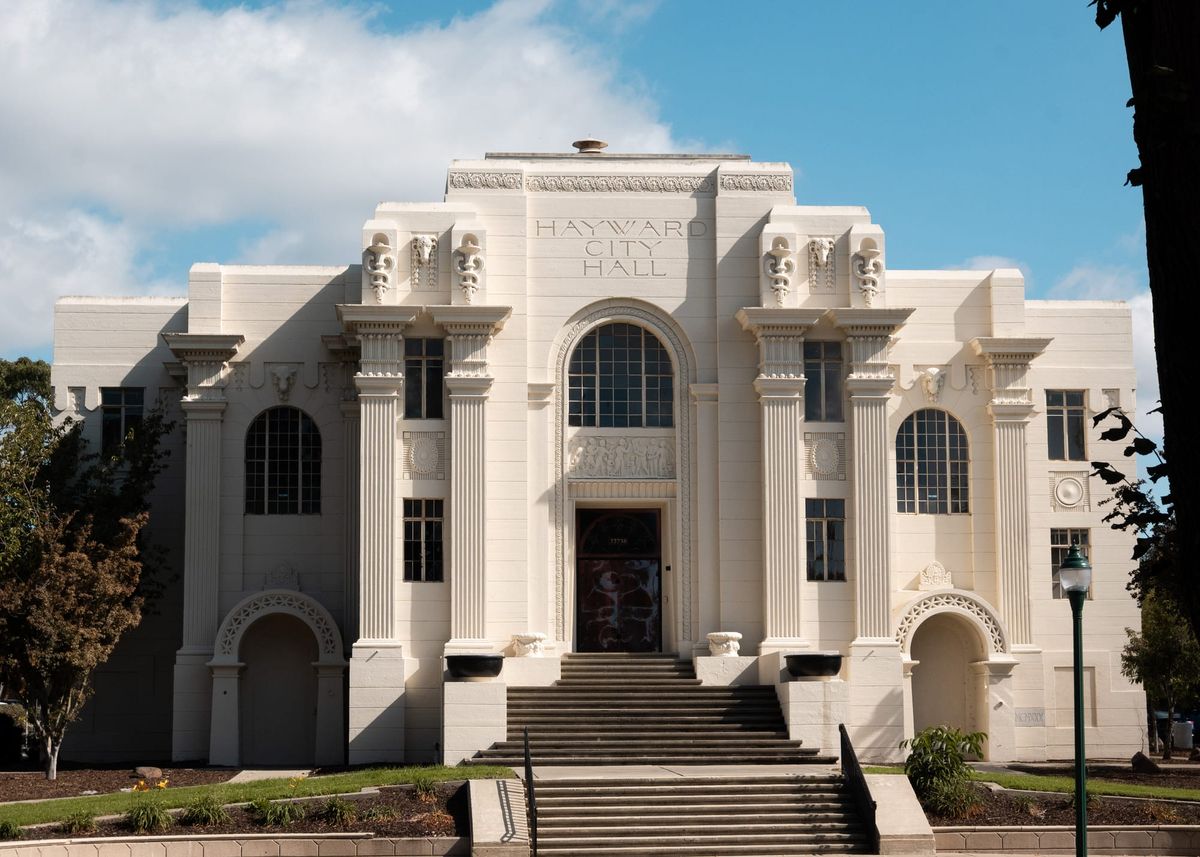
We went over the different departments and responsibilities of our city government in a previous story. But to briefly recap, the City Council and Mayor decide on the policy and it's up to the City Manager to put that policy into action. The City Manager, the highest paid person in our city, delegates the work to the city departments (all departments but City Clerk and City Attorney report to the City Manager), who then do the actual work on the ground.
Lots Of Special Districts
In New York, everything is the city government's responsibility. But here, some particular things are run by Special Districts. If you're a home owner, you'll learn a lot about your special districts by looking at your property tax bill—most of them add a line to your property tax to help cover their expenses.
These districts all have their own areas of focus, their own governing bodies, their own land that they get to control, and their own regions of varying size.
The Hayward Herald is the best place you'll find to learn about the complicated rules that govern your local life. From housing to policing to roads, we break down the boring meetings to you know what's happening. If you're able, consider supporting our work by becoming a member today!
Hayward Unified School District
Educating the residents of Hayward and the surrounding area falls to Hayward Unified School District. HUSD has its own Board of Trustees, budget, bonds, and structure completely separate from the city government. Mayor Mark Salinas's Education City initiatives rely heavily on HUSD, because the closest thing that the city has to an education arm is the Library.
The HUSD borders extend beyond the City of Hayward into unincorporated areas like Fairview, Cherryland, and parts of Castro Valley. This likely contributes to the confusion of whether or not some people live in Hayward.
Hayward Area Recreation and Park District
If you look at a green space in Hayward, chances are good it's operated and maintained by the Hayward Area Recreation and Park District. HARD also has its own Board of Directors, budget, departments, bond measures, and structure outside of the City of Hayward. From La Vista Park to Douglas Morrison Theater to Weekes Park, most green spaces in the city are under HARD's purview.
HARD's borders cover all of Hayward, Fairview, Cherryland, Ashland, San Lorenzo, and Castro Valley. With such a huge area, some people have commented that certain areas may get more love and attention than others.
Public Transit
If you're moving around the city in a bus, you're taking AC Transit. But if you're moving around on a train, that's BART. Both of these special districts have huge regional areas and their own boards, budgets, plans, and staff. Often the larger regional districts have areas that receive more attention than others and sometimes Hayward gets the short end of the stick.
With the majority of our city's greenhouse gas emissions being from cars, public transit is a necessary part of the city's climate plans despite having almost no control over it.
But Wait, There's More!
The Alameda County Mosquito Abatement District, East Bay Regional Park District (EBRPD), Bay Area Water Supply and Conservation Agency (BAWSCA), and more. Each of them have their own areas of responsibility, budget and staff, land they manage, and boards of directors. And with each new Special District, another layer of complication can arise when it comes to making substantive change in that area.
Other Stuff To Consider
Beyond special districts, there are other bodies and organizations that play a large role in Hayward. Below are just a few.
There are Joint Powers of Authority (JPA) bodies, like the Hayward Area Shoreline Planning Agency (HASPA) which governs the Hayward Shoreline. JPA bodies often form when there is overlapping ownership of resources. For example the Hayward Shoreline or South Hayward BART—the City of Hayward owns the parking lot but BART owns the station.
The Downtown Hayward Improvement Association (DHIA) covers the downtown core and is something like a Home Owners Association (HOA). Property owners in Downtown pay a fee into the DHIA—including the city—for things like extra maintenance and cleaning, as well as their social media presence and event coordination.
Large landowners like Union Pacific also play a role. The enormous Class 1 railway has at least three different lines running north to south through Hayward and they're private property. Union Pacific has its own police force and owns the rails and everything at least10 feet to either side of them.
Many services that are provided to residents are handled by third party contractors instead of city staff. Bay Area Community Services (BACS), for example, runs the Hayward Navigation Center with funding from the city—but Hayward is one of many agencies contracting their services.
Does Your Head Hurt Yet?
If all of this sounds incredibly complicated, that's because it is. For better or worse, instead of being consolidated under the umbrella of a single government, dozens of different functions are spread out across as many governing bodies. This can allow the agencies to specialize and provide services that, in theory, may be better than if they were governed on a very local level. On the other hand, it can make coordinating a nightmare with multiple staffers from different agencies needing to meet and confer and get on the same page before any work can actually begin.
But to really get an idea of how things work, let's take a look at some policies that were championed by Zohran Mamdani and see how they work in Hayward.
Rent Freeze
California is an entirely different beast than New York when it comes to rent control. In California, there is a law called the Costa-Hawkins Rental Housing Act, which places strict limits on rent control across the state. Importantly, certain types of housing cannot be rent-controlled: single-family homes, condominiums, and newly constructed apartments. For most purposes, "new" means anything built after 1995, but for some places, like Hayward, it is anything built after 1979.
In some places, this new construction exemption isn't an issue, but in Hayward it's pretty big. 12,000 units are covered, but slightly more than that are either not-covered or are in an "unknown" status, according to the Rent Review Database. Since many rentals are single-family homes or new construction, a comprehensive rent freeze is impossible under current California Law.
Free Buses
Mamdani pledged free public transportation for all New Yorkers because the city government controls the Metropolitan Transport Authority. However, in Hayward buses are controlled by AC Transit. Not only do they have a regional scope far beyond Hayward, only 10 lines serve our city out of the dozens throughout the system. This is down from before the recent Realign project, which consolidated lines, reduced frequencies, and moved routes.
Hayward officials regularly meet with AC Transit to discuss buses in Hayward, but the decisions about buses—from where they run to how frequently to whether or not there are shelters at the stops—is completely up to the Directors of AC Transit.
Affordable Housing
Mamdani also pledged to build hundreds of thousands of affordable housing units. The analysis linked to earlier does point out that it's nowhere near enough, but seems to believe that he has the authority to do it. New York has the NYC Housing Authority, which runs over half a million affordable units. It's unclear from their website if they are currently expanding their housing stock, though they are engaged in extensive renovations and updates.
Hayward has a Housing Authority, as well. But the city appears to have no public housing under its purview and it's unclear whether building new public housing is even allowable under California law. Across the Bay Area, local governments have made it easier for nonprofit housing developers, like Eden Housing, to build new units, but are still out of direct control of the housing supply.
All cities in California have a Regional Housing Needs Assessment (RHNA) for the number of units they need to build in order to address the housing crisis. But cities have no direct control over housing production, and almost every Bay Area city is well below their targets.
Housing The Unhoused
While not something Mamdani campaigned on, this is always one of the top issues in Hayward, so we thought it'd be good to address this, as well.
When someone unhoused needs services, they can't just walk up to the Navigation Center to ask for a bed. While the City of Hayward may, according to the City Budget, "[oversee] the Hayward Housing Navigation Center and [coordinate] homelessness" the reality is more complicated. Funding for the Navigation Center comes, in part, from the City of Hayward and Alameda County but the work is done by Bay Area Community Services (BACS) who, as we discussed above, is a third-party contractor answering to both the county and city.
The use of County funding, including Proposition 47 funding, forces the Navigation Center to rely on the Alameda County Coordinated Entry System. This means that people in Hayward can't be prioritized. The Coordinated Entry System covers the whole county and moves people where there's room as people find their footing.
This system means that we could have enough beds for every unhoused person in our city within the city limits, but if they use Coordinated Entry, there is no guarantee it will make any meaningful progress to the people we hope to serve. Not only that, it can displace people from familiar surroundings, relocating them to somewhere away from their informal support networks. This may be one reason—among many—that some people prefer to remain unhoused rather than use Coordinated Entry.
The Bay Area Is Built Different
These complicated layers of districts and governments and service providers shows how complicated it can be to solve some of the most pressing issues we're facing in the Bay Area. Between overlapping districts and County and State regulations, there is almost no chance that a single elected official will be able to change things as drastically as Zohran Mamdani has in New York City.
Making the change we need is going to take more than voting for one person and expecting drastic change. We need to understand the complicated systems and force them to work together to meet our needs. That's going to take a lot of hands and a lot of work, but we'll come out stronger in the end.
Mamdani's policies can be undone as easily as they were implemented if they ever get a more conservative mayor. On the other hand, changing things here will be more difficult, but they'll also be more difficult to undo once they're in place. But we need to be able to roll up our sleeves and work together to make it happen.

Comments ()